Search “how to increase breast size” and you will drown in advice. Press your breasts daily. Eat fenugreek. Sleep without a bra. Try this cream some influencer is selling.
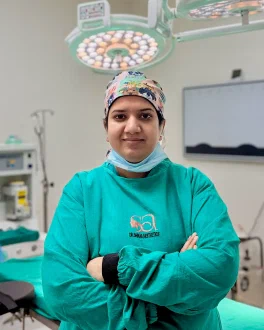
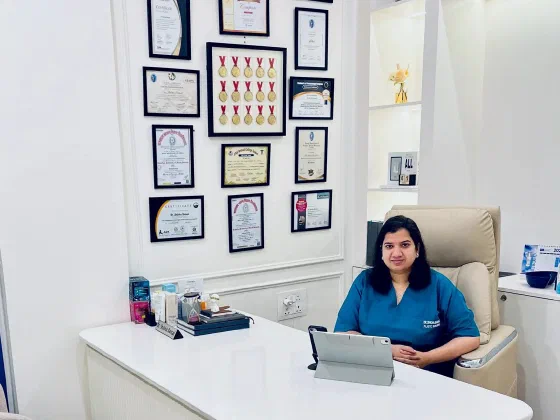
At our Gurgaon clinic, Dr. Shikha Bansal sees patients who have tried some combination of these for months before booking an appointment. They feel a little embarrassed admitting it, which is understandable. In India, breast size is still a topic people dance around, so the loudest voices end up being anonymous forums and product marketers, not doctors. That gap between what people want to know and what they can comfortably ask is exactly where misinformation takes hold, and it is the same gap behind questions like whether protruding labia minora are normal or whether the hymen grows back.
So here is what patients are told when they ask about these things, written down so you do not have to book a consultation just to get straight answers. Each myth gets a verdict and a short explanation. If you are looking for the full breakdown of proven methods to increase breast size rather than just the myths, there is a separate guide covering every real option.
Quick anatomy refresher
Most of these myths fall apart once you know what breasts are actually made of.
Two things: glandular tissue (the lobules and ducts that produce milk) and fat. These sit on top of the pectoral chest muscle, held in place by connective tissue called Cooper’s ligaments. How much glandular versus fat tissue you have is mostly down to genetics, then hormones, age, and body weight.
The part that matters: breast tissue is not muscle. You cannot exercise it bigger. You cannot press it bigger. Almost every myth on this list assumes breasts respond to stimulation the way a bicep does. They don’t.
What does change over time is support. Cooper’s ligaments and the skin over the breast stretch with age, pregnancy and weight swings, so the breast can sit lower on the chest. That is a change in position rather than size, and it is what a breast lift is designed to address.
The myths
Myth 1: Pressing or massaging breasts makes them bigger
Verdict: False
This is probably the single most common question younger patients ask. The thinking is straightforward: stimulate the area, it grows. But fat and glandular tissue do not multiply from external pressure. Massage might temporarily increase blood flow to the skin, which can create a brief feeling of fullness, but that fades within minutes. Nothing structural changes.
No clinical study has shown that massage increases breast volume. Not one.
Myth 2: Sex increases breast size
Verdict: False
During arousal, blood flow increases throughout the body, and breasts can feel slightly fuller or more sensitive. Same mechanism as skin flushing. Once things settle down, breasts go back to their normal size. That temporary fullness sometimes gets misread as growth, but it isn’t.
No published research connects sexual activity with permanent breast tissue changes.
Myth 3: Sleeping without a bra makes breasts grow
Verdict: False
Bras support and shape, but they do not suppress growth. Taking them off at night does not “free” tissue to expand. Some women find sleeping braless more comfortable, and that is perfectly fine, but it will not change your cup size.
There is no biological mechanism connecting bra wearing habits to breast development.
Myth 4: Certain foods (fenugreek, soy, milk) increase breast size
Verdict: Mostly false
There is a grain of truth here, which is what makes this one sticky. Foods like soy and fenugreek contain phytoestrogens, plant compounds whose chemical structure is a bit like human estrogen. In the body they act as weak estrogens, far less potent than your own, and the amounts in a normal diet are too small to change breast size.
The phytoestrogen levels in a normal diet are nowhere near enough to produce any measurable change in breast size. No controlled trial has shown that fenugreek, soy, milk, papaya, or any other food increases breast volume.
Eating well supports your general health and normal hormone function, which is always worth doing. But eating specific foods hoping for breast growth will leave you disappointed.
Myth 5: Chest exercises make breasts bigger
Verdict: Mostly false
The pectoral muscles sit underneath breast tissue. Push-ups and chest presses can build that muscle, improve your posture, and create a slightly lifted look. For some women that makes a visible difference.
But the breast tissue itself, the fat and glandular components that actually determine cup size, does not grow from exercise. Exercise is great for fitness. It is not a breast enlargement method.
Myth 6: Birth control pills permanently increase breast size
Verdict: Mostly false
Some hormonal contraceptives cause mild fluid retention that makes breasts feel fuller or tender. This is a known side effect, and yes, some women notice it.
But it is temporary. Along with the fluid, there can be mild hormonal stimulation of the breast tissue, and both usually reverse after stopping the pill, so breast size goes back to where it was. No permanent tissue growth happens from contraception alone.
Myth 7: Breast size increases after marriage
Verdict: False
This belief is common in India and it has zero biological basis. Your body does not know or care about your marital status. Marriage does not trigger any hormonal shift that affects breast tissue.
When women do notice changes around the time of marriage, there is almost always another explanation: natural age related development that was already happening, weight change, starting hormonal contraception, or early pregnancy. The timing is coincidence, not causation.
Myth 8: You can increase breast size in one week
Verdict: False
No diet, exercise routine, massage technique, supplement, or device can change breast tissue composition in days or weeks. Breast development is a slow biological process driven by hormones and genetics.
Anything promising results in “7 days” or “2 weeks” is selling you urgency, not medicine.
Myth 9: Wearing a smaller bra makes breasts look bigger
Verdict: False
A too-tight bra compresses tissue and pushes it upward, which can create the appearance of more cleavage while you are wearing it. That is compression, not growth. Remove the bra and everything goes back to normal.
What a tight bra actually does over time: discomfort, skin irritation, shoulder grooves, restricted breathing. Wear one that fits properly instead.
Shoulder grooves, neck pain or upper-back pain that persist even in a well-fitted bra are a different matter. In women with very large breasts, that pattern is one of the most common reasons patients ask about breast reduction.
Myth 10: Breast enlargement creams work
Verdict: False
No cream or gel is approved by the FDA, CDSCO, or any major regulatory body for breast enlargement. Most of these products contain unregulated herbal extracts with no clinical evidence behind them. Some cause allergic reactions or contact dermatitis.
Here is the simple test: an ordinary cosmetic cream has nothing in it that can grow breast tissue. The only skin products that can affect breast tissue are ones that contain hormones or strong hormone-like extracts, such as prescription estrogen or testosterone gels. They act on the whole body, carry real risks and are not prescribed for breast enlargement. So a ‘breast cream’ that genuinely worked would be an unlabelled hormone product, which is a reason to avoid it.
What actually affects breast size
Not everything is a myth. Several things genuinely change breast volume, and if you came here looking for real ways to increase breast size, this is where the honest answer starts.
Pregnancy and breastfeeding change breast size
Verdict: True
During pregnancy, estrogen, progesterone, prolactin and placental hormones make the milk ducts and milk-producing glands grow. Many women notice their breasts getting bigger and more tender early, often in the first trimester, and they keep enlarging through pregnancy.
After breastfeeding ends, breasts usually get smaller as the expanded tissue shrinks back. Some women find their breasts end up a different size, shape, or firmness than before pregnancy. That is normal.
If the change still bothers you once breastfeeding has finished and your weight has settled, the options depend on what changed: position, volume, or both. The guide to breast surgery after pregnancy walks through each, and for women who also want tummy changes addressed, a mommy makeover plans breast and abdominal procedures together.
Weight gain increases breast size
Verdict: True
Breasts contain a lot of fat. Gain body fat and your breasts may get larger. Lose weight and they may get smaller. How much they change depends on your individual breast composition: women with more fatty tissue in their breasts see bigger swings with weight changes than women with mostly glandular tissue.
It works in reverse too, with a limit. Breasts that are mostly glandular may stay large even after significant weight loss. When that size causes persistent neck, back or shoulder discomfort, surgery becomes a reasonable conversation, and how breast reduction is priced in India explains what goes into the cost.
Hormonal conditions can affect breast size
Verdict: True
Conditions that shift your estrogen, progesterone, or thyroid hormone levels can influence breast tissue. PCOS often involves both hormonal changes and weight gain, both of which can affect breast size. Thyroid disorders can alter fluid balance and tissue metabolism.
If you notice unexplained breast size changes along with other symptoms like irregular periods, sudden weight shifts, fatigue, or skin changes, see a doctor. There may be a hormonal condition involved.
Surgery is the only proven method for permanent increase
Verdict: True
Breast augmentation with implants and breast fat transfer are the only methods that actually work long term. Neither is a one-time, forever fix: implants are not lifetime devices and may need replacing or revising at some point, and part of the transferred fat is naturally reabsorbed, so fat transfer sometimes needs a second session. Both are well studied, unlike injectable breast fillers, and like any surgery both carry risks a surgeon should go through with you, such as capsular contracture, implant rupture or the need for revision with implants, and fat necrosis, oil cysts or uneven take with fat transfer. They suit different bodies and goals: implants vs fat transfer compares them side by side, and what breast augmentation costs in India breaks down the price.
To be clear, this is not a push toward surgery. Plenty of patients walk out of a consultation deciding they are fine as they are, and that is a perfectly good outcome. This is simply what the science says.
A few more things worth knowing
Period-related breast changes are normal
Many women notice fullness, tenderness, or mild size changes at certain points in their menstrual cycle. That is estrogen and progesterone doing their thing. It resolves within days. It is not growth.
Some women also notice a tender swelling in the armpit that grows and settles with their cycle. That is often accessory breast tissue responding to the same hormones. It is usually harmless, but any new lump deserves a check, and if the tissue bothers you, axillary breast removal is the surgical option.
Watch out for fake before-and-after photos
AI generated images are showing up everywhere on social media and beauty sites. Some create “before and after” comparisons showing dramatic breast changes from creams or exercises. These are fabricated. If a result looks too dramatic or too perfect, it probably is.
Sudden unexplained changes need medical attention
Most breast size changes have boring explanations: weight, hormones, pregnancy, aging. But sudden or unexplained changes should not be brushed off. Rapid growth, asymmetric swelling, skin changes, dimpling, pain, or a new lump are all reasons to see a doctor. Do not wait on these.
Frequently asked questions
Can pressing breasts increase their size?
No. Breasts are fat and glandular tissue, not muscle. Pressure cannot create new tissue. Massage might temporarily improve circulation, but that has no lasting effect on size.
Does sex increase breast size?
No. The temporary fullness during arousal comes from increased blood flow. It passes. Sexual activity does not change breast tissue volume.
Can food increase breast size?
No specific food will change your cup size. Soy and fenugreek contain phytoestrogens, plant compounds that act as weak estrogens, but the amounts in food are far too small to change breast size. No controlled trial has shown otherwise. Concentrated herbal ‘breast enlargement’ pills are unregulated and unproven, so check with a doctor before taking any.
Do chest exercises increase breast size?
Not the breast itself. They strengthen the pectoral muscle beneath it, which can improve posture and create a subtle lift. But the fat and glandular tissue that determines cup size does not grow from exercise.
Why do breasts change size during periods?
Estrogen and progesterone fluctuations cause temporary fluid retention and mild swelling. This is normal and resolves on its own.
Is there any cream that increases breast size?
Not a single one. No breast enlargement cream is approved by the FDA, CDSCO or any major regulator, and no controlled study backs any topical product for this purpose.
Does breast size increase after marriage?
No. Marriage does not trigger any hormonal change affecting breast tissue. Any changes around that time are likely from weight change, contraception, or pregnancy.
What is the only proven way to permanently increase breast size?
Breast augmentation with implants or breast fat transfer. Both are well-established procedures, though neither is a forever fix: implants may need replacing at some point, and some transferred fat is reabsorbed. A consultation covers the risks and which one suits your body.
What to do from here
If you have been Googling breast size claims and ended up here, you are in good company. A lot of women go through the same search before finding answers that are actually grounded in medicine.
If you are thinking about changing your breast size, larger or smaller, and want to know what is realistic for your body, a consultation is the simplest way to find out. We can walk you through the options, what kind of results are achievable, and what the process looks like. No sales pitch.
Book a consultation at our clinic in Gurgaon, Delhi NCR.