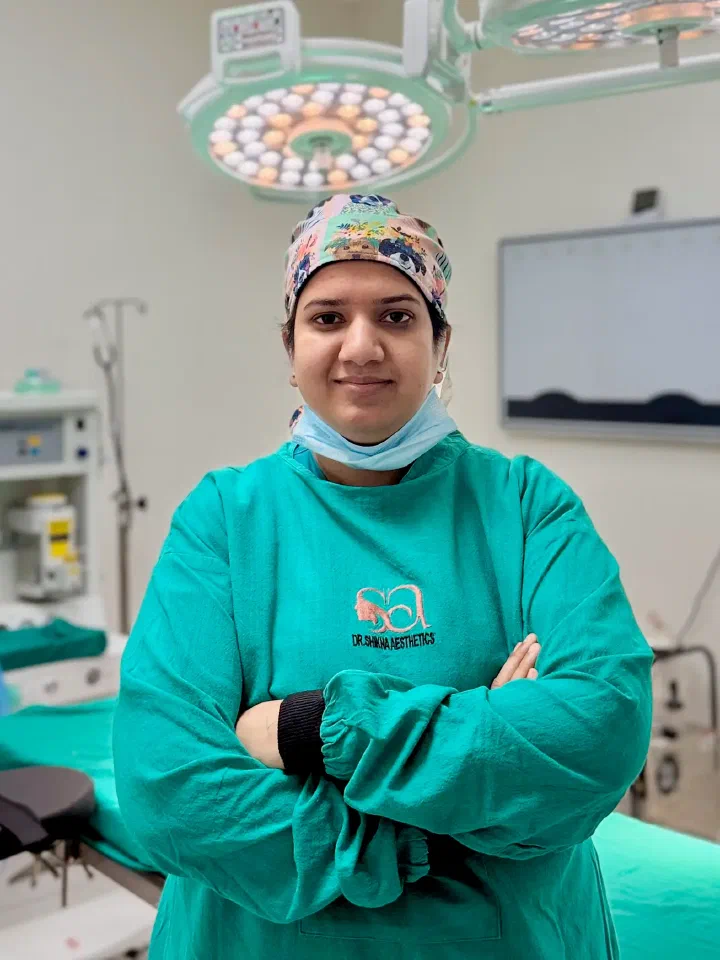

Gynecomastia is enlarged male breast tissue - a mix of gland, fat, and sometimes loose skin sitting on the chest. Gynecomastia surgery (also called male breast reduction) is performed at Dr. Shikha Bansal’s clinic in Gurgaon, using liposuction, gland excision, or a combined approach depending on the grade and the tissue present.
Key points
- Flatter, more defined chest contour for most patients, in a single outpatient operation
- Scars kept to the areolar border or axilla for most grades; Grade 3 skin-excision cases are told this openly at consultation
- Liposuction, gland excision, or combined - technique matched to the tissue, not a default
- Same-day discharge, most patients back at a desk by day 3 to 4
- Post-op follow-up built in up to the 3-month mark
What gynecomastia actually is, and how it differs from chest fat
Gynecomastia is the benign enlargement of male breast tissue. In a true gynecomastia chest, there is a firm disc of glandular tissue sitting behind and around the nipple-areola - it can often be felt as a rubbery lump when the area is pinched. On top of the gland there is usually some fat, and in longer-standing cases the skin stretches a bit too.
Pure chest fat (sometimes called pseudogynecomastia) feels soft all the way through, with no firm disc under the nipple. That distinction matters because the two look similar in a t-shirt but need different operations. Fat-only chests often respond well to liposuction alone. Glandular gynecomastia almost always needs direct gland excision, because liposuction will not remove a firm disc no matter how aggressive the cannula.
The consultation includes a physical exam with the patient sitting, lying, and flexing, along with a check for asymmetry, nipple position, and skin quality. A history of whether the fullness has been stable for years or is still changing also guides planning. For more detail before the visit, the guide on gynecomastia vs chest fat walks through it properly.
Dr. Shikha explains

Five facts about gynecomastia

Gynecomastia, explained
Results
Gynecomastia Surgery: before and after
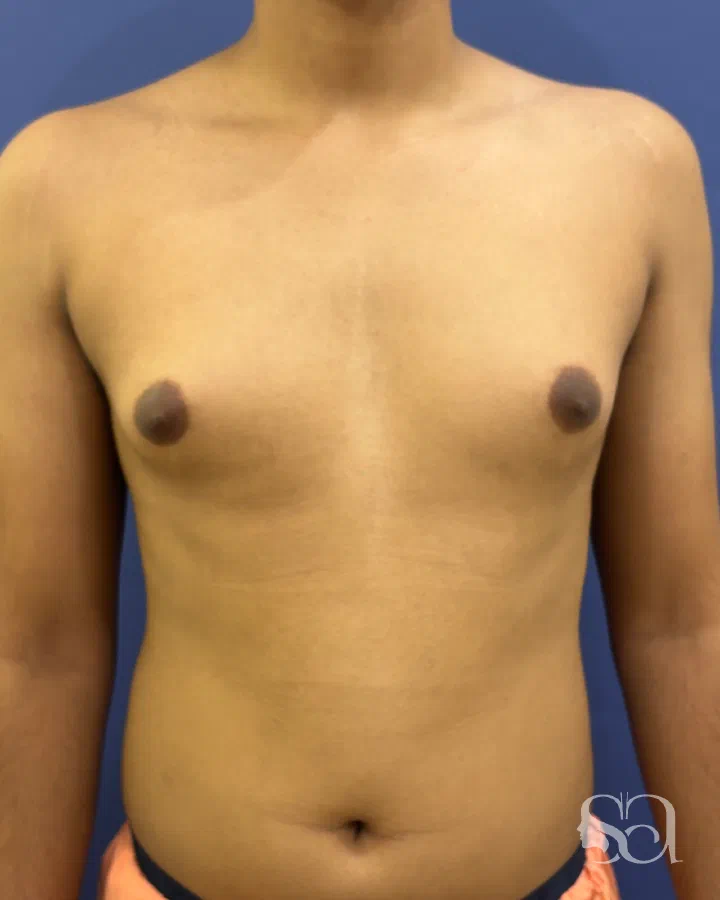 Before
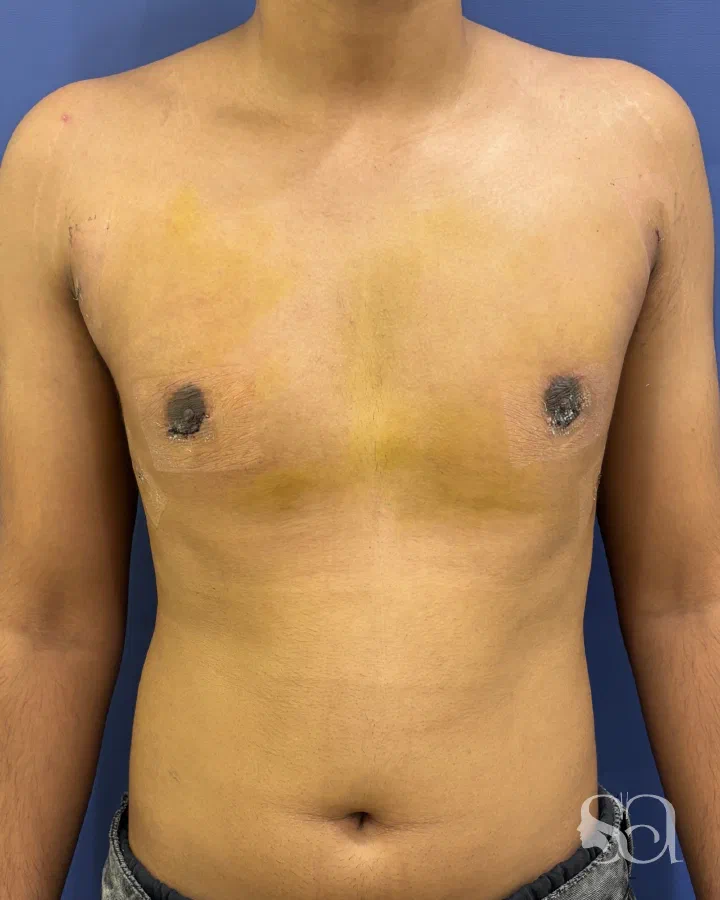 After
AfterThis result shows an unclothed body after surgery.
Gynecomastia Surgery, case 1
- 7 days after surgery
- Results vary between individuals
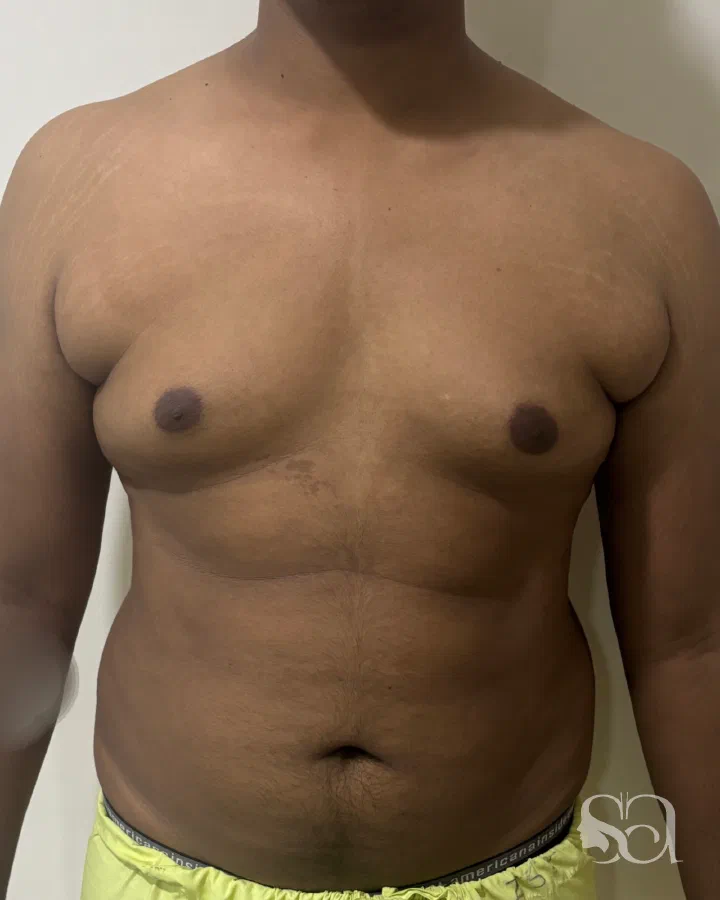 Before
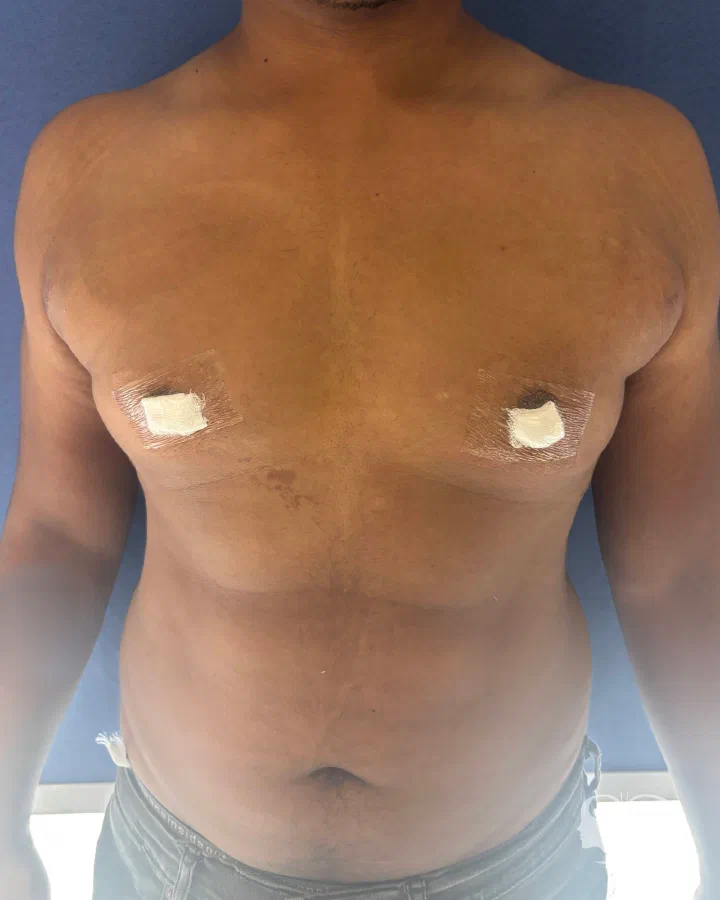 After
AfterThis result shows an unclothed body after surgery.
Gynecomastia Surgery, case 2
- 11 days after surgery
- Results vary between individuals
Photographs of the clinic's own patients, shown with their written consent, with faces blurred or covered as far as the result allows. They explain what an operation can change; they are not a promise of your result.
Male breast reduction and gynecomastia surgery - same operation, different names
Patients in Gurgaon often search for “male breast reduction” and “gynecomastia surgery” as if they were two different things. They are the same operation. “Gynecomastia” is the medical name for the condition - enlarged male breast tissue. “Male breast reduction” is the plain-English name for the surgery that fixes it.
The surgical plan does not change based on which term is used. What changes the plan is the tissue itself: how much of the fullness is gland, how much is fat, how loose the skin is, and whether the case is primary or a revision of an earlier surgery.
Grades of gynecomastia and what each grade usually needs
Grade is a shorthand for describing how much tissue is present and whether skin laxity is part of the picture. It is a planning tool, not a treatment template - two men at the same grade can still need different operations.
Grade 1 is a small amount of glandular tissue around the nipple, with no excess skin. These cases are usually gland excision through a small incision at the areolar border, sometimes with a little liposuction around it. Scars are hard to find after a few months.
Grade 2a is moderate enlargement without skin excess. Grade 2b is the same size but with mild skin looseness. Grade 2a typically needs combined liposuction and gland excision. Grade 2b uses the same approach, with a slightly longer skin retraction period in the compression vest.
Grade 3 is significant enlargement with obvious skin excess and a lower-sitting nipple. These cases sometimes need skin excision in addition to gland and fat removal, and the scar plan is longer. Grade 3 patients are told this openly at consultation rather than being promised invisible scars.
For a longer walk-through of grades and what each one realistically needs, see gynecomastia grades and treatment options.
Talk it through with Dr. Shikha
Book a consultation at Dr. Shikha Aesthetics in Sushant Lok 1. Bring your questions about gynecomastia surgery, and any previous reports.
How the technique is chosen - liposuction, gland excision, or combined
There is no single best technique for gynecomastia. The right approach depends on what the tissue is made of.
Liposuction alone works when the chest is almost entirely fat with very little gland. Tumescent liposuction is done through two small incisions hidden in the axilla or at the side of the chest. Scars are tiny. This is the cleanest result when the anatomy actually fits.
Gland excision (surgically, a subcutaneous mastectomy) is non-negotiable when there is a firm disc under the nipple. The gland is removed through a semicircular incision at the lower edge of the areola, where the skin colour transition hides the scar well. Leaving a sliver of gland behind is what causes the puffy-nipple look that drives second-opinion cases. The aim is to remove the gland thoroughly while leaving a thin layer of tissue under the nipple, which prevents a sunken or crater-like result.
Combined liposuction and gland excision is what most patients actually need. Liposuction first to contour the surrounding fat and blend the chest into the underarm and lower border, then direct gland excision through the areolar incision. This is the default approach for grade 2 cases.
Revision cases - patients who had surgery elsewhere and were left with a crater, a remaining disc, or uneven contour - are worked out from scratch based on what is present now, not what grade the chest started at. These cases usually need a longer consultation.
The procedure, from consultation to same-day discharge
The first consultation is about 30 minutes. The chest is examined to confirm whether it is gland-dominant, fat-dominant, or mixed, and the likely technique is discussed. Questions about medications, anabolic steroids, and significant weight changes in the last year are part of this, because any of those can change the plan. Before surgery is booked, basic blood work and a cardiac clearance appropriate to the patient’s age are required.
The surgery itself takes 90 minutes to 2.5 hours depending on whether liposuction, excision, or both are needed, and whether one side is more involved than the other. Most cases are done under general anaesthesia because it is more comfortable for chest liposuction; smaller gland-only cases can be done under local with sedation.
It is an outpatient procedure. The patient arrives in the morning, the surgery is done, and discharge is the same evening once the patient is steady on their feet and eating normally. The compression vest goes on from the moment the patient wakes up and is worn home.
Risks and complications of gynecomastia surgery
Swelling, bruising and temporary numbness around the nipple are expected. A collection of blood (haematoma) is the most common complication that needs attention: one side of the chest suddenly swelling, tightening or becoming more painful than the other is reviewed the same day.
Less common are a fluid collection (seroma), infection, contour irregularity, asymmetry, and a sunken or crater-like nipple if too much tissue is removed from under it. The nipple and areola can lose some sensation, and their blood supply can be affected in larger excisions. Scars can widen or thicken, and anaesthesia carries its own small risks. A small number of patients need a touch-up once the chest has settled. These are discussed before consent.
Recovery week by week after gynecomastia surgery
Recovery follows a predictable pattern for most patients.
Week 1: chest is swollen, bruised, and sore. The compression vest is worn 24 hours a day. Desk work is usually fine from day 3 or 4. No lifting above shoulder level, no driving for the first 48 hours after general anaesthesia.
Week 2 to 3: sutures come out around day 7 to 10. Swelling drops enough that the new contour starts showing. Still in the vest full-time, and still no chest or arm workouts.
Week 4 to 6: light cardio is fine, and lower-body gym work is usually allowed. The vest can ease down to 12 hours a day. Chest workouts stay off until week 6 at the earliest.
Month 3 to 6: residual swelling continues to settle, and the final chest contour becomes clear by the 6-month mark. Scars look their worst around week 6 (pink, slightly firm) and then fade steadily. By 6 to 12 months the areolar scar is usually a thin line most people do not notice without being told where to look.
A fuller day-by-day breakdown is in the gynecomastia recovery week-by-week guide.
Gynecomastia results in Gurgaon - what to expect at 3 and 6 months
The chest looks flatter immediately after surgery, but immediate is not the same as final. The early flatness is partly the surgery and partly the compression vest pressing everything down. The real result shows up over the following months.
At 6 weeks most patients look clearly better than pre-op, but the chest still has some firmness and mild swelling, and the nipple area may feel slightly numb. At 3 months the contour is largely settled - this is usually when patients first say the chest feels like their own again. At 6 months the skin has redraped, residual swelling is gone, and the scars have faded meaningfully. This is the timing of the before-after photos shown on this page.
Patients from across Delhi NCR - Gurgaon, Delhi, Noida, Faridabad, Ghaziabad - usually come in for 3 follow-ups in the first 6 weeks and then one review at 3 months. Patients living further out can share progress photos over WhatsApp after that.
Will gynecomastia come back after surgery?
The gland that is removed is gone. That piece of tissue cannot grow back. What can happen is new tissue developing if the underlying trigger is not addressed - ongoing anabolic steroid use, certain prescription medications (some antidepressants, spironolactone, finasteride in a few cases), untreated low testosterone, or significant weight gain.
In Dr. Shikha Bansal’s practice, recurrence is rare when the original cause is identified and dealt with, and when the gland excision is complete rather than partial. When a patient had surgery elsewhere and the chest puffed up again, the cause is usually either leftover gland (not true recurrence) or an ongoing trigger that was never investigated. Both can usually be improved with revision - see the revision and second-opinion guide.
When surgery is not advised, and when other specialists are involved
Gynecomastia surgery carries a low complication rate in well-selected patients, but it is not for everyone.
Active anabolic steroid use is a clear reason not to operate. The tissue grows back while steroids are in use, and the surgery will be wasted. A minimum off-period is required before surgery is booked, and this is checked honestly at consultation.
Surgery is also not advised when significant weight loss is still in progress. If a patient is losing 10+ kilos on a weight programme, the chest is still changing and skin redrape will be unpredictable - weight stabilisation comes first.
A firm new lump that does not feel like typical gynecomastia tissue, or one-sided enlargement with off-consistency, is referred out for imaging and sometimes a biopsy before any surgical plan. Male breast cancer is rare but it does exist, and it is not ruled out casually.
An uncontrolled endocrine cause - untreated thyroid issue, pituitary problem, or undiagnosed low testosterone - is referred to an endocrinologist first, with a review three to six months later. Fixing the hormone picture sometimes reduces the tissue enough that surgery becomes smaller, or occasionally unnecessary.
In teenage boys, pubertal gynecomastia often settles on its own within one to two years, so surgery is usually deferred until the chest has been stable.