
If you’re thinking about breast surgery and might want children later, breastfeeding will probably come up in your mind before it comes up in conversation. Most women aren’t looking for guarantees. They want a straight answer: what changes, what stays the same, and how to plan around it.
Here’s the honest version: many women breastfeed after breast surgery. But no surgeon can promise your breastfeeding ability will be exactly the same as it would have been without surgery. The outcome depends on your anatomy before the operation, which procedure you have, how it’s performed, how your body heals, and what happens during future pregnancies. That’s a lot of variables, and anyone who collapses them into a simple “yes” or “no” isn’t being careful enough.
This guide walks through the breastfeeding picture for breast augmentation, breast lift, and breast reduction, and covers when it might make sense to time surgery differently.
Who this article is for
This is written for women who are:
- considering breast surgery before having children
- planning another pregnancy after a previous one
- worried that cosmetic or functional breast surgery could reduce milk supply
- trying to decide whether surgery should wait until after pregnancy or breastfeeding
- tired of vague reassurance and looking for a practical explanation
It’s particularly useful if your family planning isn’t fully settled yet and you want that uncertainty taken seriously during surgical planning.
Why breastfeeding should be part of the surgery conversation
Breastfeeding isn’t determined by surgery alone. Some women already have limited glandular tissue, hormonal differences, or nipple anatomy that affects supply, even without any surgery. So the question “can I breastfeed after this?” is never just about the operation.
A good consultation should cover:
- Are you planning pregnancy soon, or is it a distant possibility?
- Have you breastfed before? Were there supply difficulties?
- Is your main concern size, shape, droop, heaviness, or asymmetry?
- Is surgery about appearance, symptom relief (neck pain, shoulder grooving, rashes), or both?
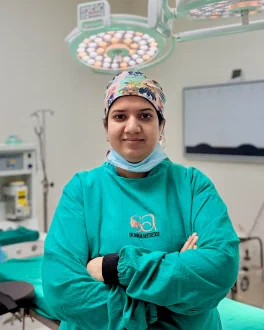
At consultation in our Gurgaon practice, Dr. Shikha records your previous pregnancies, any breastfeeding history and your plans for children alongside the chest measurements, and when feeding matters to you, the incision and technique are chosen with that in mind.
This matters because some procedures carry less breastfeeding risk than others, and some life stages make waiting a smarter choice.
What actually affects breastfeeding after surgery
Five things decide most of the risk: your baseline breast anatomy, the nerve supply to the nipple, the incision and how tissue is handled, how much tissue is removed, and what future pregnancies do to the breast.
Baseline breast anatomy. Milk production depends partly on how much functional glandular tissue you naturally have. If you started with limited glandular tissue, surgery isn’t the only factor.
Nerves and nipple-areola function. The nerves around the nipple-areola complex support the let-down reflex. Procedures that move or rearrange tissue near this area carry more risk than those that leave it largely undisturbed.
Incision choice and tissue handling. In studies of women with breast implants, an incision around the edge of the areola (periareolar) has been linked to insufficient milk supply more often than an incision in the breast fold (inframammary) or the armpit (transaxillary), probably because it cuts closer to the ducts and the nerves to the nipple. The studies are small and mostly older, and the evidence is mixed, so a periareolar incision is a risk factor, not a verdict, and a fold incision is not a guarantee. What matters is how the operation is performed, how much tissue is dissected, and whether ducts, nerves, or glandular tissue are significantly affected.
Amount of tissue removed or rearranged. This is most relevant in breast reduction, where removing tissue is the whole point. Technique matters, but so does volume.
Future pregnancy changes. Even if breastfeeding remains possible, pregnancy can change breast size, skin quality, and shape after surgery. That sometimes influences whether surgery is better done now or after you’re finished breastfeeding.
Breastfeeding after breast augmentation
In breast augmentation, the breast is enlarged using implants. Of the three procedures covered here, augmentation is generally the least likely to interfere with milk production because it doesn’t typically remove breast tissue.
“Less likely” is not “risk-free,” though.
What matters:
- incision location (a fold or armpit incision avoids cutting around the areola)
- implant pocket placement
- how much dissection was needed
- your natural glandular tissue and breast development before surgery
If the structures involved in lactation are preserved well, many patients go on to breastfeed without major issues. But some women notice changes in supply, nipple sensitivity, engorgement patterns, or find they need to supplement. Worth noting: those things also happen to women who’ve never had surgery. Across the published studies, though, women with breast implants are somewhat less likely to breastfeed exclusively than women without them, even though most still breastfeed to some degree. Part of that gap may come from breast development before surgery rather than the implant itself, because some women choose augmentation for underdeveloped breasts that had less glandular tissue to begin with. Implants sit behind the breast tissue or the muscle and do not come into contact with the milk. That’s why confident promises in either direction don’t hold up.
From a practical standpoint, augmentation before pregnancy is still reasonable if you understand two things clearly (the lifestyle-return guide for breast augmentation covers how the recovery timeline and breastfeeding fit together):
- breastfeeding outcomes can’t be promised
- pregnancy may change breast shape enough that a revision or lift could come up later
Breastfeeding after breast lift
Yes, many women can breastfeed after a breast lift, particularly when the nipple stays attached to the tissue beneath it rather than being detached and moved. A breast lift reshapes and raises the breast by removing excess skin and repositioning tissue. The breastfeeding picture depends on how much internal rearrangement was needed and how the nipple-areola complex was handled.
Many women can still breastfeed after a lift. But a lift is not one single operation performed the same way every time. The amount of droop, skin laxity, tissue quality, and the technique chosen all change what the surgery looks like on the inside.
The breastfeeding conversation gets more nuanced when:
- the nipple needs significant repositioning
- the breasts have changed a lot after pregnancy or weight loss
- you might want another pregnancy soon
There’s a second issue here that isn’t just about milk supply: durability. If you plan to become pregnant soon, a lift done now may be affected by the next pregnancy and breastfeeding cycle. Breasts can enlarge, deflate, or droop again afterward. Some women prefer to wait for that reason alone, unless the current concern is significant enough to justify doing it now.
Breastfeeding after breast reduction
Breast reduction requires the most careful breastfeeding conversation of the three because it involves removing breast tissue and reshaping what remains.
That doesn’t mean breastfeeding is impossible after reduction. It does mean the risk conversation has to be more direct.
Factors that matter:
- how much tissue needs to come out
- which reduction technique is used
- how blood supply, nerves, and ductal connections to the nipple are preserved
- your anatomy and future pregnancy plans
Some patients breastfeed fully after reduction. Others have partial supply or need supplementation, and some are not able to breastfeed. If the nipple and areola have to be removed and replaced as a free nipple graft, which is usually reserved for very large reductions or when the nipple’s blood supply would otherwise be at risk, breastfeeding is not possible afterwards. Because the surgery changes the breast more substantially, no responsible surgeon should offer blanket reassurance.
At the same time, delaying reduction isn’t always the right call. If heavy breasts cause daily pain, bra-strap grooving, rashes, posture problems, difficulty exercising, or real quality-of-life issues, surgery may be the right choice even for someone who wants children later. The decision becomes about weighing current symptoms against future breastfeeding priorities, and that’s a personal calculation, not a medical formula.
Quick comparison by procedure
| Procedure | Breastfeeding picture | Why the conversation differs |
|---|---|---|
| Breast augmentation | Possible for many women; exclusive breastfeeding somewhat less common in studies | Usually doesn’t remove breast tissue; a fold or armpit incision avoids cutting around the areola, but tissue handling and baseline anatomy still matter |
| Breast lift | Possible for many women, depends on technique and degree of reshaping | Tissue is rearranged and nipple position may change, so the effect varies between patients |
| Breast reduction | More caution needed | Breast tissue is removed, and lactation-related structures may be affected depending on surgical plan |
Planning pregnancy soon vs. finished breastfeeding
If pregnancy is likely soon, waiting is worth discussing, especially for a lift or a mainly cosmetic reduction. If you have finished breastfeeding and your breasts have settled, timing is at its simplest.
If you’re planning pregnancy soon
When pregnancy is on the near horizon, surgeons will often raise whether waiting makes more sense, particularly for a lift or a purely aesthetic reduction. Reasons:
- future pregnancy may change the breast shape again
- breastfeeding goals may feel more pressing than cosmetic timing right now
- you may prefer one surgery after your body has settled postpartum, rather than surgery now plus a possible revision later
This doesn’t mean surgery should always be postponed. It means the timing trade-off deserves a real conversation.
If pregnancy is uncertain or years away
Surgery may still be reasonable, especially when symptoms or body-image concerns significantly affect your daily life. The decision should be based on your current needs, with the understanding that breastfeeding can’t be promised afterward.
If you’re finished breastfeeding
This is the simplest timing scenario. Once breasts have stabilized after pregnancy and breastfeeding, the surgeon can assess shape, skin stretch, volume loss, and asymmetry more accurately. For many women, this is when a lift or combined reshaping plan becomes most predictable.
The real question is risk tolerance, not certainty
In consultation, the better question isn’t “will I definitely be able to breastfeed?” It’s “given my anatomy and life plans, how much uncertainty am I comfortable with?”
A consultation should cover:
- your likely need for tissue removal or major reshaping
- whether timing surgery after future pregnancies would be wiser
- whether what you want now justifies the uncertainty
- whether your goals could be met with a different procedure or a delayed plan
Two women asking the same breastfeeding question may need very different recommendations. That’s why generalized online advice only gets you so far, and why an individualized consultation matters.
Practical planning checklist
Before your consultation, it helps to think through these questions:
- Do I want pregnancy in the near future, or is it only a possibility?
- Is breastfeeding a strong personal priority for me?
- Am I looking for symptom relief, cosmetic change, or both?
- If my breast shape changes again after pregnancy, would I still be comfortable having had surgery now?
- Would I rather manage current discomfort or appearance concerns a while longer and reassess later?
- Have I discussed my previous breastfeeding history (if any) with the surgeon?
- Do I understand that I may need lactation support later, even without a surgical complication?
These questions won’t remove uncertainty, but they tend to produce better decisions.
When it may make sense to wait
Waiting is worth discussing if:
- you’re actively planning pregnancy soon
- your concern is mainly aesthetic rather than symptom-driven
- you would feel distressed if pregnancy changed the result shortly after surgery
- preserving every possible advantage for future breastfeeding is a top priority
Waiting isn’t always best. But the timing question deserves as much attention as the surgical technique question.
Frequently asked questions
Can you breastfeed after breast augmentation?
Many women can. But outcomes vary, and no surgeon should guarantee it. Your anatomy before surgery, incision choice, and surgical technique all play a role. Studies suggest women with implants are somewhat less likely to breastfeed exclusively, and an incision in the breast fold or armpit tends to disturb the ducts and nipple nerves less than one around the areola. The implant itself does not come into contact with breast milk.
Can you breastfeed after a breast lift?
Many women are still able to breastfeed after a lift. The answer depends on how much reshaping was needed and how the surgery was performed.
Is breastfeeding harder after breast reduction?
It can be more uncertain. Breast reduction removes tissue and reshapes the breast more significantly than augmentation or a lift. Some women breastfeed fully, some partially, some need supplementation, and some cannot breastfeed. Techniques that keep a column of tissue under the nipple attached tend to preserve breastfeeding potential best. After a free nipple graft, breastfeeding is not possible.
Should I wait until after pregnancy for breast surgery?
Sometimes, especially if pregnancy is likely soon and your main concern is cosmetic. But if you have significant physical symptoms or a strong reason for surgery now, the answer may be different.
Does an incision around the areola always mean breastfeeding problems?
No, but it is the incision most often linked to reduced milk supply in studies of implant patients, which is why a breast-fold or armpit incision is often preferred when breastfeeding is a priority. Tissue handling, nerve preservation, ductal integrity and your natural anatomy also matter.
If I breastfed successfully before, does that guarantee I will after surgery?
No. Prior success is useful information, but it doesn’t create a guarantee after surgery or after a future pregnancy.
When to speak with a plastic surgeon
Consider a consultation if:
- you’re comparing surgery now versus after a future pregnancy
- you want honest counseling about breastfeeding uncertainty before choosing a procedure
- you’re considering reduction for symptom relief but care deeply about future feeding options
- you’ve had previous pregnancies, breastfeeding difficulties, or major postpartum breast changes
Dr. Shikha Bansal (MCh Plastic & Reconstructive Surgery, Haryana Medical Council Reg. No. 24859) can assess your goals, tissue characteristics, degree of droop or heaviness, and future family plans before discussing whether surgery now, later, or in a modified form makes the most sense.
Next step
If breastfeeding is part of your long-term planning, it belongs in the conversation before surgery, not as an afterthought. The goal isn’t to promise certainty. It’s to make a well-informed decision that respects both where you are now and where you’re headed.
For individualized guidance in Gurgaon or Delhi NCR, you can book a consultation with Dr. Shikha Bansal to talk through augmentation, lift, or reduction planning.
This article is general information only and not a substitute for medical advice from a qualified plastic surgeon who has examined you.