

“Implants or fat transfer?” It’s the question most women walk into consultation with. But the honest answer isn’t one or the other. It’s: which one works for your body?
Some women do better with implants. Others get exactly what they want from fat transfer. And sometimes the answer changes once we actually examine the tissue, measure the breast footprint, and talk about what “fuller” means to you specifically. The internet tends to frame this as implants = fake, fat transfer = natural. That’s an oversimplification that leads people to pick a method before understanding what their anatomy actually needs.
This guide walks through both options in a practical way, based on tissue, frame, and realistic expectations rather than marketing slogans. Your final candidacy always depends on an in-person exam and a real conversation with your surgeon.
Who this article is for
This is for women who are:
- comparing breast augmentation with breast fat transfer
- trying to figure out how much size increase is actually realistic
- unsure whether their tissue can support a natural-looking implant result
- more interested in shape and proportion than a cup size number
- wondering if a breast lift should be part of the plan
If you’ve been scrolling through advice that declares one option “best” without explaining for whom, this should help cut through that noise.
What each procedure actually does
Breast augmentation with implants
A silicone implant goes in to add volume and reshape the breast. Implants give the most reliable route to a noticeable size increase, structured upper fullness, and stronger asymmetry correction when the difference between sides is significant.
Women tend to prefer implants when they want:
- a predictable size change they can plan around
- upper-pole fullness (that “filled in” look above the nipple)
- visible difference in fitted clothing
- better balance on a frame with a small breast footprint
Here’s the thing people miss: implants can look very natural. But that depends on implant selection and how much tissue you have covering them. A slim patient with tight skin needs a completely different plan than someone who already has moderate breast volume.
Breast fat transfer
Fat transfer takes fat from areas like the abdomen, flanks, or thighs and injects it to add breast volume, using your own tissue rather than a synthetic breast filler. The result is typically a softer, subtler enhancement, not a big jump in size.
This tends to appeal to women who want:
- a modest volume increase
- a softer change in contour
- improvement in mild asymmetry
- contouring of a donor area as a bonus
- to avoid having an implant at all
One thing to be clear about: fat transfer isn’t a like-for-like swap for implants. Biology sets the limits. Not all transferred fat survives, and how much can be placed safely depends on your existing tissue and blood supply.
The real deciding factor: how much change do you actually want?
For most women, this is where the decision starts to become clear.
If you want a noticeable increase, implants are the more reliable path. You pick a volume, and barring complications, that’s roughly what you get. They’re better for women who want real fullness, more projection, or a defined upper breast.
If your goal is “I just want to look a bit fuller in my clothes” or “I don’t want anyone to know I had anything done,” fat transfer might be enough. It suits women who are after proportion rather than drama.
A word about cup sizes: they’re almost useless as a planning tool. Sizing varies wildly between brands. In consultation, it’s far more productive to talk about chest width, breast base diameter, skin elasticity, and how much fullness you want up top versus at the bottom.
When implants tend to be the better fit
Implants are worth considering when:
- you want a moderate to significant volume increase
- you have limited breast tissue and want defined enhancement
- upper-pole fullness or cleavage matters to you
- your breasts are noticeably asymmetrical
- you’re comfortable knowing implants are durable but not permanent
They’re also useful when your frame needs a specific volume to create visual balance. The planning conversation isn’t just about “how big.” It’s about tissue thickness, nipple position, chest wall shape, and how the implant will sit inside your anatomy.
Some women choose implants because they want the most predictable result in a single surgery. That’s reasonable. Just go in knowing that implants don’t need replacement on a fixed schedule, but they may eventually need monitoring, revision, or removal, whether because of symptoms, aging, or simply changing preferences.
When fat transfer tends to be the better fit
Fat transfer works well when:
- you want a subtle to moderate increase, not a dramatic jump
- you have enough donor fat to work with
- you’d like enhancement plus body contouring in the same surgery
- you’d rather avoid an implant if your goals allow it
- your breasts already have decent shape and you mainly want more fullness
It’s a good fit for women who care about proportion over cup size. Some patients aren’t chasing upper fullness at all. They want to look slightly fuller, softer, and better balanced in regular clothes.
But fat transfer has real limits. If you’re very lean, if you want a large increase, or if your breast tissue is tight, the result may fall short of what you’re picturing. Wanting the “most natural” option sometimes still leads back to implants, because those are what actually match your anatomy and goals.
Breast augmentation vs fat transfer: key trade-offs
| Decision factor | Implants | Fat transfer |
|---|---|---|
| Size increase | More predictable and usually greater | More modest and biologically limited |
| Upper-pole fullness | Easier to achieve | Usually softer and less structured |
| Cleavage effect | Often better when anatomy allows | More limited |
| Feel | Depends on implant, tissue coverage, and placement | Uses your own fat, but final feel still depends on existing tissue |
| Symmetry correction | Usually stronger for major differences | Better for mild asymmetry |
| Scars | Small incision scars | Small liposuction and injection entry points |
| Recovery | Focused on the chest | Recovery in the chest plus donor areas |
| Long-term issues | May need future monitoring or revision | Volume retention varies; may need repeat grafting |
| Best for | Women wanting more noticeable enhancement | Women wanting subtle enhancement with donor-area contouring |
Feel, shape, cleavage, and symmetry
Women often fixate on size first. Understandable. But the patients who end up happiest are usually the ones who focused on shape and proportion.
Implants are better at creating a rounder, fuller upper breast. They also help more when there’s a visible asymmetry that needs real correction. That doesn’t mean every implant result looks “done.” When the implant dimensions and projection are matched carefully to the chest and tissue thickness, the result can look like you were just born with fuller breasts.
Fat transfer creates a gentler change. It’s good for softening contour and filling mild hollowing, but it won’t give you defined cleavage or a round upper pole the way implants can. And “natural-looking” means different things to different people. For one woman, it’s a change nobody notices. For another, it’s fuller breasts that still look proportional to her frame.
Recovery: what it actually feels like
Recovery isn’t just about days off work. It’s about where you’ll be sore and what daily activities become annoying for a few weeks.
After implants
Expect tightness, swelling, and chest discomfort in the first week or two. Reaching overhead, sleeping position, and exercise all need temporary adjustments. If the implant sits under the muscle, that early tightness tends to feel more intense.
After fat transfer
You’re recovering in two places: the breasts and wherever the fat was taken from. A lot of women are surprised that the donor site (abdomen or thighs, usually) bothers them more than the breast area. There’s compression garments to wear, plus swelling and bruising at the liposuction sites.
There’s also the graft protection phase. Your surgeon will likely tell you to avoid pressure on the breasts and keep your weight stable while healing, because big weight swings can affect how much fat survives.
Every recovery is different. Pain tolerance, technique, and the exact surgical plan all play into it, so take any timeline you read online (including this one) as a general guide, not a guarantee.
Long-term maintenance and revision
This is where most online comparisons get lazy.
Implants are durable, but they aren’t permanent. Some women go fifteen or twenty years without any issues. Others need revision sooner because of changes in preference, shifting implant position, capsular contracture, rupture, or just the normal effects of aging, pregnancy, and weight fluctuation on breast tissue. A rare implant-associated lymphoma (BIA-ALCL) has been linked mainly to textured implants and is part of every implant consent conversation. It is uncommon and tends to be treatable when caught early, but it is something to understand and monitor for, such as new swelling or fluid around an implant years after surgery.
Fat transfer skips the implant, but it’s not completely hands-off either. Some transferred fat won’t survive. If you want more volume than a single safe session can deliver, a second round may be needed. And the long-term look can still change with weight shifts and aging, just like natural breast tissue does.
The question worth asking isn’t “which lasts forever?” (neither does). It’s “which gives me the kind of result I want, with trade-offs I can live with?”
Mammograms and imaging: what to know
Breast imaging works fine after both implants and fat transfer. The main thing: tell the radiology team what you’ve had done.
With implants, the mammography technician uses modified views to image breast tissue around the implant. Ultrasound or MRI may come into play depending on your situation. Just mention you have implants when you book the appointment.
After fat transfer, imaging can sometimes pick up expected post-surgical changes like small areas of fat necrosis or oil cysts. These are typically benign, but the radiologist needs to know your history to interpret the images correctly. Good documentation and consistent follow-up matter here.
None of this is a reason to avoid surgery. It’s a reason to choose a qualified surgeon, keep your follow-up appointments, and always give your imaging provider the full picture.
When a breast lift changes everything
If sagging is your main concern, neither implants nor fat transfer alone will fully solve it.
A lift comes into play when the nipple has dropped, the skin envelope has stretched, or the breast has lost its shape after weight loss, pregnancy, or breastfeeding. In that situation:
- an implant can add volume but may still leave the breast sitting low
- fat transfer can improve fullness but won’t correct droop
- a lift may be needed on its own or combined with either volume method
This is why two women asking for the same cup size might need completely different surgeries. When shape, nipple position, and loose skin are the real problem, the lift often matters more than whether you choose implants or fat transfer.
Patient scenarios that come up often
Scenario 1: wants a clearly fuller look
A slim woman with small breasts and limited upper fullness who says “I want to see a real difference” is usually a better implant candidate. If she also doesn’t have much donor fat, fat transfer is unlikely to deliver what she’s after.
Scenario 2: wants something subtle
A woman with some existing volume, enough donor fat, and a goal of looking slightly fuller without it being obvious. Fat transfer often fits well here.
Scenario 3: wants fuller breasts after pregnancy
When the concern is deflation plus droop, the conversation usually shifts to whether a lift is needed first. The choice between implants and fat transfer becomes secondary to getting the shape right.
Scenario 4: proportion over size
“I just want to look balanced with my hips and shoulders.” This woman might do well with either option depending on her tissue and donor availability. This is exactly where anatomy-based planning matters more than whatever’s trending online.
Fat transfer breast augmentation cost in India
Both breast implants and fat transfer breast augmentation are quoted on a “starting from” basis in India, so a single fixed price rarely applies. Fat transfer cost is driven largely by the extent of liposuction needed to harvest donor fat and by whether a second grafting session is likely, while implant cost is driven mainly by implant type and the facility. The honest comparison is the full plan, not the headline number.
Cost matters. But the cheapest quote isn’t always the best value.
Implant surgery costs vary with implant type, facility, surgeon experience, and whether you’re combining procedures. Fat transfer costs depend on the extent of liposuction, operating time, and whether a second session might be needed.
In the Indian market, the main cost drivers tend to be:
- For implants — implant brand and profile, operating theatre, anaesthesia, and facility charges, the experience of the operating surgeon, and whether a breast lift is combined in the same surgery.
- For fat transfer — the extent of donor-area liposuction needed to harvest enough fat, operating time, and the likelihood of a repeat grafting session if more volume is wanted than one safe round can deliver.
A lower number on paper doesn’t mean much if the plan doesn’t match your anatomy, goals, or follow-up needs. Compare the full picture: the likely procedure plan, recovery reality, and the possibility of future revision.
When to talk to a plastic surgeon
Consider a consultation if:
- you’re going back and forth between subtle and more visible enhancement
- you’re not sure whether you have enough donor fat
- you think sagging might be part of the problem
- you want honest guidance on what maintenance looks like over time
- you want to compare options based on your own anatomy instead of generic advice
A proper consultation covers tissue quality, breast footprint, asymmetry, nipple position, skin stretch, donor-site availability, and realistic limits. That level of detail is what separates a good decision from a hopeful guess.
To discuss implants vs fat transfer for your own anatomy in Gurgaon or Delhi NCR, read more about breast augmentation with implants and breast fat transfer, or book a consultation to compare both against your goals.
Frequently asked questions
Is fat transfer safer than implants?
They’re different procedures with different risk profiles. Neither is automatically “safer” across the board. Your health, anatomy, the surgical plan, and surgeon experience all factor in.
Do implants always look less natural than fat transfer?
No. A well-planned implant augmentation can look completely natural on the right frame. It comes down to proportion, tissue coverage, implant choice, and the surgeon’s judgment.
Can fat transfer match implant results?
Usually not. Fat transfer improves fullness, but it’s not a direct substitute when you want a larger or more structured increase.
Which has easier recovery?
Depends on the plan. Implant recovery is concentrated in the chest. Fat transfer adds donor-site soreness on top. Some women find one easier, some the other. There’s no universal answer.
Will I need a lift too?
Possibly. If you have significant droop, stretched skin, or a low nipple position, a lift may be recommended regardless of which augmentation method you choose.
Can I still get mammograms after surgery?
Yes. Just let the imaging centre know about your surgical history. The radiologist and technician will adjust the imaging technique or interpretation as needed.
Next step
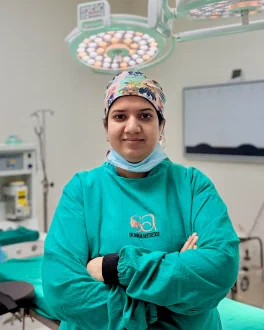
If you’re weighing implants against fat transfer, the most useful thing you can do is get a consultation based on your anatomy, not just your wishlist. Dr. Shikha Bansal examines tissue quality, size goals, asymmetry, donor-site availability, and whether a lift should be part of the plan before making a recommendation.
To discuss your options in Gurgaon or Delhi NCR, book a consultation.