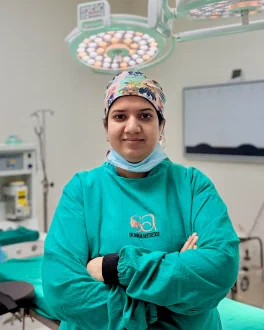


Most information about breast augmentation focuses on the surgery itself — the operation, the recovery, the visible result in the first few months. What is covered far less often, and in far less depth, is what comes after: the years of monitoring, the complications that can emerge long after the incisions have healed, and the questions a patient should be able to ask their surgeon at every follow-up visit.
This post is about the long-term safety picture. It covers the complications common enough to plan for, the ones rare but serious enough to understand, and the surveillance framework that keeps patients informed about what is happening inside the implant pocket over time. Short-term side effects — swelling, bruising, temporary soreness, altered nipple sensation in the days and weeks after surgery — are real but mostly self-limiting. This post spends less time on those and more on what the evidence says about risks that can emerge months to years after the procedure.
Who this article is for
This post is for you if:
- You are considering breast augmentation and want a complete picture of the risk profile before committing
- You have had breast implants for several years and are unsure what routine follow-up you should be arranging
- You have heard terms like “capsular contracture”, “BIA-ALCL”, or “silent rupture” and want to understand what they actually mean in plain language
- You want to know what imaging surveillance is appropriate for silicone implants, and why it matters
For patients still in the early stages of deciding whether breast augmentation is right for them, the full breast augmentation overview covers the complete clinical picture from candidate selection through recovery. If you are weighing an augmentation with a simultaneous lift, the augmentation mastopexy guide explains how the combined procedure changes both the risk profile and the recovery arc.
Immediate and early side effects
To set a baseline: most patients experience a predictable recovery arc after breast augmentation. Swelling peaks in the first three to five days and resolves substantially over four to six weeks. Bruising follows a similar timeline. Temporary changes in nipple sensitivity — both increased and decreased sensation — are common in the first weeks and typically normalise over two to three months, though a small subset of patients experience longer-term changes.
Breast tightness and muscular discomfort (when implants are placed in the submuscular plane) eases as the muscle adapts to the implant over four to six weeks. Scar maturation continues for twelve to eighteen months; incision sites fade considerably by the end of the first year in most patients, regardless of whether the access was in the inframammary fold, periareolar, or transaxillary.
These side effects belong to a normal healing trajectory. They are worth understanding, but they are not the complications that require long-term monitoring. Those begin with capsular contracture.
Capsular contracture: what it is and how it is graded
Every breast implant, without exception, triggers the formation of a capsule — a thin layer of scar tissue that surrounds the implant as part of the body’s normal response to a foreign device. In most patients, this capsule remains soft, thin, and functionally invisible. The breast looks and feels natural. The capsule is not a complication; it is expected anatomy.
Capsular contracture is what happens when that scar tissue tightens around the implant. The capsule thickens and contracts, compressing the implant and sometimes deforming the breast shape. It is the most common long-term complication of breast augmentation — reported rates in the literature range roughly from 3 to 10 percent at five years, varying by implant surface, pocket placement, and surgical technique — and it can develop months to years after an uncomplicated operation.
The clinical grading system used to describe severity is the Baker scale, which classifies contracture into four grades:
Baker Grade I: The breast is soft to the touch and looks natural. There is no visible or palpable evidence of the capsule hardening. This is the normal outcome — Grade I is not a complication, it is what the capsule looks like when it is behaving correctly.
Baker Grade II: The breast is slightly firm on palpation but still looks normal. The capsule is palpable but does not distort the shape or cause discomfort. Grade II is monitored at follow-up visits but does not typically require intervention.
Baker Grade III: The breast is firm. The shape shows visible distortion — the implant may appear round, high, or sitting unnaturally on the chest. There may be mild discomfort on palpation. Grade III usually prompts a consultation to discuss whether revision surgery is appropriate.
Baker Grade IV: The breast is hard. There is clear visible deformity, and the breast is tender or painful on examination. Grade IV contracture significantly affects both appearance and quality of life and is generally treated surgically.
For Grade III and Grade IV contracture, treatment options include total or partial capsulectomy (removal of the scar tissue capsule) with or without implant replacement. In some cases, a change in implant position — subglandular to submuscular, or vice versa — is part of the revision plan. The breast implant revision and removal guide covers the full decision framework for when intervention is warranted.
Several factors are associated with higher contracture rates: subglandular placement (relative to submuscular), subclinical infection or biofilm at the time of implant placement, prior chest irradiation, and smoking. The implant surface also plays a role — macrotextured surfaces, once widely used to reduce contracture rates, have since been linked to a separate complication (BIA-ALCL, discussed below), which has changed how surface choice is weighed.
Silent rupture: when the implant fails without symptoms
Saline implants, when they rupture, deflate visibly. The change in breast size is immediate and clinically obvious. The saline is absorbed harmlessly, and the revision timeline is straightforward.
Silicone gel implants are different. Because of the cohesive nature of modern silicone gel — particularly the highly cohesive “gummy bear” formulations — a rupture may not be visible or palpable at all. The implant shell can develop a tear, and the gel can remain largely contained within the scar capsule while the breast appears externally normal. This is a silent rupture.
The clinical consequences of silent rupture in modern cohesive gel implants are not fully established. Some cases are found incidentally on imaging ordered for an unrelated reason, with no symptoms. Others are associated with gradual capsule firmness or subtle shape changes over time. What is clear is that silent rupture cannot be detected reliably by physical examination alone — which is why imaging surveillance exists.
Surveillance schedule for silicone implants: The FDA currently recommends MRI screening starting at five to six years after surgery and then every two to three years thereafter, specifically to detect silent rupture in cohesive silicone gel implants. Ultrasound is an alternative where MRI is not accessible or is contraindicated, though MRI remains the more sensitive modality for intracapsular rupture detection.
In India, there is no government-mandated surveillance protocol equivalent to FDA guidance, but following this schedule is clinically appropriate. It is worth confirming at the time of surgery what follow-up plan your surgeon provides — and whether rupture surveillance is included in that plan. The guide to mammograms with breast implants explains how standard breast cancer screening is performed safely alongside implants, including the Eklund displacement technique used to avoid implant obstruction during mammography.
BIA-ALCL: what it is, what the risk level is, and the India context
BIA-ALCL — breast implant-associated anaplastic large cell lymphoma — is not breast cancer. It is a lymphoma: a malignancy of T-cells in the fluid or scar tissue surrounding the implant rather than in the breast gland itself. Understanding the distinction matters — the clinical presentation, treatment, and prognosis are different from breast carcinoma.
BIA-ALCL is linked primarily to textured implant surfaces, and within that category most strongly to macrotextured implants — specifically, Allergan’s Biocell surface, which carries the highest reported risk across published literature. The FDA has documented an association with multiple textured implant types, but the risk with smooth implants is extremely low and is not considered a clinically meaningful driver of this complication.
What the risk level actually is: Estimates vary considerably across published literature, reflecting differences in study design, follow-up duration, and implant surface classification. For macrotextured Allergan Biocell implants (the highest-risk category), some analyses have estimated the range at roughly 1 in 2,000 to 1 in 10,000 implanted patients over a lifetime. For smooth-surface implants, very few BIA-ALCL cases have been reported, and the risk is considered negligible. In 2019, Allergan voluntarily recalled its Biocell macrotextured implant line globally, following FDA action. The CDSCO (India’s central drug regulatory authority) aligned with this international action; macrotextured Biocell implants are no longer available in the Indian market.
For patients in India today, the implant brands available — including Motiva, Mentor, Allergan smooth-surface devices, and Sebbin — use smooth or very-low-textured surfaces. The full brand comparison for the Indian market covers each brand’s surface technology and regulatory status, which is directly relevant to this risk discussion.
Symptoms to watch for: BIA-ALCL typically presents years after implant placement — most often two to ten or more years post-surgery. The most common presentation is a sudden, unexplained increase in breast size due to fluid accumulation (seroma) around the implant. This delayed seroma is clinically distinct from the early seroma that can occur in the first weeks after surgery; late-onset seroma appearing years after an uncomplicated healing process is the key trigger for investigation.
The appropriate investigation includes ultrasound-guided aspiration, with the fluid sent for cytology and specifically tested for CD30 positivity — the cellular marker for BIA-ALCL. Early detection matters: BIA-ALCL confined to the periprosthetic fluid and capsule is generally treated successfully with implant removal and total capsulectomy, without requiring chemotherapy. Advanced-stage disease involving lymph nodes is rarer but carries a more complex treatment course.
Understanding this complication is not a reason to avoid implants. It is a reason to know what to watch for, to maintain regular follow-up with a surgeon who will take late-onset seroma seriously, and to know which implant you have.
BIA-SCC and breast implant illness: the complete picture
Two additional safety topics deserve mention for completeness:
BIA-SCC (breast implant-associated squamous cell carcinoma) is a rare malignancy arising in the capsule tissue surrounding the implant. It is distinct from BIA-ALCL in both cell type (squamous carcinoma rather than lymphoma) and clinical behaviour. The FDA issued an initial safety communication on BIA-SCC in 2022. Reported case numbers remain very small — the absolute risk appears low, though the condition continues to be characterised as awareness grows. Like BIA-ALCL, it typically presents as a late seroma or peri-implant mass and is diagnosed through cytology and tissue biopsy.
Breast implant illness (BII) is the term used by patients — and increasingly by medical literature — to describe a range of systemic symptoms attributed to breast implants: fatigue, joint and muscle pain, cognitive difficulties, hair loss, and skin changes, among others. There is no established mechanism and no diagnostic test. The FDA acknowledges BII as a real patient experience — it is included in breast implant labelling in some markets — and some patients report symptom improvement after explantation, though controlled evidence for a causal relationship is not established. BII is worth discussing at consultation if systemic health concerns are part of the decision.
Long-term outlook: implants are not lifetime devices
The phrase “lifetime device” is not accurate for any breast implant. The device shell has a finite lifespan, and while modern implants are substantially more durable than earlier generations, the question is not whether an implant will eventually need attention — it is when, and under what circumstances.
Many patients reach ten, fifteen, or twenty years post-augmentation without a significant complication. The implant is intact, the capsule is soft, and the result remains satisfactory. These patients may eventually choose elective revision — for implant exchange, to address age-related shape change, or to change volume — but there is no fixed expiry date that mandates surgery in the absence of symptoms or findings.
Others develop complications that require earlier intervention: Grade III or IV contracture, silent rupture confirmed on imaging, or a symptomatic change in shape. Across published literature, revision rates at ten years are reported at roughly 15–20 percent for any cause.
The practical implication: breast augmentation creates an ongoing clinical relationship between the patient and their surgeon. Annual check-ins, adherence to the silicone surveillance schedule, and a clear protocol for what to do if symptoms develop are part of what that relationship should include. Patients who lose contact with their original surgeon — because of relocation, practice closure, or simply years passing — are at a disadvantage when a late complication appears without a follow-up record.
Implant traceability: the device card and why it matters
Every breast implant carries a unique device identifier — a lot number and model code recorded at the time of surgery. This information should be provided to the patient as an implant card (sometimes called a device card), listing the make, model, lot number, and implant date.
There are practical reasons to keep this document:
- If the original surgeon’s practice closes or is unreachable years later, the implant card is the only independent record of what device was placed.
- In the event of a product recall (as happened with Allergan Biocell globally in 2019), the lot number is what determines whether a specific patient’s implant falls within the affected batch.
- Manufacturer warranty registration and claims for device replacement assistance typically require the device identifier.
In our Gurgaon practice, every patient receives their implant card at the time of discharge. If you are consulting for a primary augmentation or a revision procedure anywhere, asking whether a device card will be provided — and how the practice manages long-term follow-up records — is a reasonable and important pre-operative question.
Questions to raise at consultation and at follow-up
Before surgery:
- What implant surface are you recommending, and why? Smooth versus low-textured surfaces carry different risk profiles; the choice should be explained, not assumed.
- What does the post-operative follow-up schedule look like? When does MRI surveillance begin for silicone gel implants, and who is responsible for arranging it?
- Will I receive an implant device card?
- Under what circumstances should I contact the clinic between scheduled visits — and what symptoms specifically warrant an unscheduled appointment?
At annual follow-up:
- Is the capsule soft bilaterally? Any new firmness should be graded and documented.
- Is the rupture surveillance schedule on track?
- Have any new safety communications or regulatory updates been issued about the specific implant model in use?
The breast implant sizing methodology and device selection guide explains how implant type, profile, and volume choices are made at the outset — understanding those decisions before surgery puts patients in a better position to ask the right follow-up questions later.
Revision cost in Gurgaon
For patients who develop a complication requiring surgical management — Grade III or IV capsular contracture, silent rupture confirmed on MRI, or a rare BIA-related finding — revision surgery is a distinct procedure from the original augmentation.
In Gurgaon, revision costs vary considerably depending on scope: simple implant exchange, partial or total capsulectomy with exchange, or more complex reconstruction. Estimates start from a higher base than primary augmentation because operative time is typically longer and the anatomy is more demanding. The breast implant revision and removal guide covers the different revision scenarios and what influences the cost and complexity of each. EMI options are available for patients who prefer to manage costs over time.
Frequently asked questions
What is the most common long-term complication of breast implants? Capsular contracture — the abnormal thickening and tightening of the scar tissue that naturally forms around every implant — is the most frequently encountered long-term complication. It affects a minority of patients but is reported at roughly 3–10 percent at five years across published series, depending on implant type and technique. Grade I and II are managed by monitoring; Grade III and IV typically require revision.
Do I need an MRI if my breast implants feel completely normal? For silicone gel implants, yes — silent rupture cannot be excluded by physical examination alone. FDA guidance recommends MRI starting at five to six years post-surgery and every two to three years thereafter. Saline implants deflate visibly when the shell fails, so MRI surveillance is not indicated for saline.
Are the breast implants available in India linked to BIA-ALCL? The highest-risk device — Allergan’s macrotextured Biocell implant — was recalled globally in 2019 and is no longer available in India. The implants currently on the Indian market (Motiva, Mentor smooth, Allergan smooth, Sebbin) use smooth or very-low-textured surfaces and carry an extremely low documented BIA-ALCL risk. The risk is not zero for all textured surfaces, but the regulatory action in 2019 removed the highest-risk devices.
What should I do if I have older textured implants from before 2019? Confirm with your operating surgeon and device card whether your implants are macrotextured Biocell devices. If confirmed, discuss a surveillance plan — annual clinical review and ultrasound monitoring for late seroma is typically recommended by surgeons who follow international guidance. Prophylactic explantation in the absence of symptoms is not recommended by major international guidelines, but ongoing monitoring is appropriate.
Can breast implants affect cancer screening? Standard mammography is performed safely with breast implants using the Eklund displacement technique, which moves the implant posteriorly and brings more breast tissue into the imaging field. The number of views per breast increases slightly but the screening is not compromised. Implants do not prevent breast cancer screening. The mammograms with breast implants guide explains the screening process in detail.
Is breast implant illness (BII) a documented medical condition? Patients report it consistently, and the FDA acknowledges BII as a real patient experience — it is included in breast implant labelling in some markets. No causal mechanism has been established and there is no diagnostic test. Some patients report meaningful improvement after explantation; others do not. It is a topic that deserves an honest, unhurried conversation at consultation if systemic health concerns are part of your decision.
Considering breast augmentation in Gurgaon?
Understanding the long-term safety picture is part of informed decision-making — not a reason to avoid surgery, but a reason to go into it with clear expectations, the right questions prepared, and a follow-up plan agreed upfront.
If you are considering breast augmentation or want to review the follow-up framework for existing implants, an in-person consultation is the right starting point. The breast augmentation overview covers the full clinical picture, including implant selection, the operation itself, and what post-operative follow-up should look like. When you are ready to discuss your specific situation, book a consultation at the clinic.
This article is general information about breast implant safety and long-term complications. It is not a substitute for medical advice. Individual risks depend on your anatomy, implant choice, surgical history, and health background. Please consult a qualified plastic surgeon for guidance specific to you.
Dr. Shikha Bansal, MCh Plastic & Reconstructive Surgery (SMS Medical College, Jaipur) • Haryana Medical Council Reg. 24859 • Ex-Fellow, Artemis Hospital, Gurgaon • Member: IAAPS, APSI