
Once a patient has decided on silicone implants over fat transfer, the next question that lands in consultation is almost always the same: “Which brand should I pick — Motiva, Mentor, Allergan, or Sebbin?”
It’s a fair question, and most pages online dodge it. They talk about saline versus silicone, smooth versus textured, round versus teardrop. Useful background, but it stops short of the decision the patient is actually trying to make. The brand-by-brand comparison is the part that gets skipped.
Brand alone does not determine your result. The pocket your implant sits in, the profile you and your surgeon pick, and the experience of the person performing the surgery move the outcome far more than the logo on the implant. But warranty terms, shell technology, traceability, and how each brand’s size range maps onto Indian chest dimensions do shift the answer, and those are the parts of the decision a written quote at consultation should be able to defend.
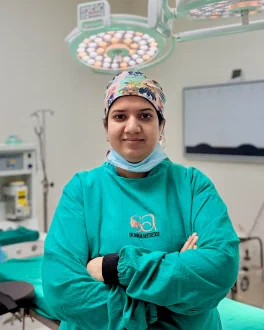
This guide compares the four silicone breast implant brands a patient in Gurgaon or Delhi NCR is most likely to be offered, written from what Dr. Shikha Bansal quotes and stocks in her own breast augmentation practice rather than from a brochure.
Who this article is for
You’ll get the most out of this if you:
- have already decided on silicone implants and are choosing between brands
- want to know what “Motiva costs more” actually buys you compared to a mid-tier brand
- have a quote in hand and want to understand the brand line item; the full cost breakdown covers every other line on that quote
- are worried about long-term safety after reading about the Allergan BIOCELL recall
- want a brand decision matched to your chest width and tissue thickness, not a generic “use what your surgeon recommends”
If you’re still weighing implants against fat transfer in the first place, the breast augmentation vs fat transfer comparison is the better starting point.
The four silicone implant brands you’re likely to be offered in India
Hundreds of breast implant brands exist globally. In Indian clinics, particularly in Delhi NCR, four of them dominate the actual quote sheets:
Motiva — made by Establishment Labs in Costa Rica. The newest of the four to the Indian market and the most premium-positioned. Known for the SmoothSilk shell, ProgressiveGel cohesive gels, and Q-Inside microtransponder traceability that lets a hand-held scanner identify the implant after surgery without imaging.
Mentor — made by Mentor Worldwide, a Johnson & Johnson company in the US. Among the longest FDA track records of any cohesive silicone implant on the Indian market: MemoryGel received FDA premarket approval on 17 November 2006, the same day the FDA approved Allergan’s (then Inamed’s) silicone gel range. The MemoryGel range is the workhorse; MemoryShape is the anatomical/teardrop option.
Allergan / Natrelle — made by Allergan (now AbbVie), with implant manufacturing concentrated in Costa Rica since the company announced the closure of its Arklow, Ireland plant in 2008 and transferred production there. A cohesive gel pioneer, FDA-approved the same day as Mentor in November 2006. Allergan’s macrotextured BIOCELL surface was recalled globally in 2019 over BIA-ALCL risk; the current Natrelle range in most markets is smooth-shell only, with the Inspira cohesive gel line being the most common implant in cosmetic augmentation.
Sebbin — made by Groupe Sebbin in France. Less prevalent in India than the other three but available through select distributors. Often the lower entry point on a brand-comparison quote. Sebbin is CE-marked for the European market but is not FDA-approved for use in the United States — a distinction worth knowing if you are comparing Indian quotes against American sources.
There are other brands a patient might encounter (Polytech of Germany, Eurosilicone, Silimed) but they are not routine choices in most Delhi NCR clinics today. If your surgeon offers a brand outside the four above, the questions in this guide still apply.
Brands that turn up in searches but rarely on an Indian quote sheet. Silimed breast implants are manufactured in Brazil, Polytech in Germany, Eurosilicone in France under the GC Aesthetics group, and Cereform breast implants in France. None of the four is routinely stocked in Delhi NCR and none is on this clinic’s quote sheet, which is why they are not compared in full below. Patients who come across them while researching are usually reading an international page or a distributor listing rather than a local quote. If one of these brands is quoted to you here, the brand is the line to verify rather than the price: ask the clinic for the CDSCO import licence and the warranty document in writing before the surgery is booked.
What actually differs between modern silicone breast implants
Strip away the marketing, and cohesive silicone implants differ on five practical dimensions:
- Shell — the multi-layer silicone elastomer envelope. Modern shells reduce gel bleed (slow silicone seepage) compared with the older devices that drove implant scares two decades ago. The manufacturing variation between brands matters more for clinical research data than for what a patient feels post-operatively.
- Cohesive gel grade — the cross-link density of the silicone gel. Higher cohesivity (“gummy bear”) holds shape in thin-tissue patients; lower cohesivity feels softer when there is adequate native tissue.
- Surface texture — smooth, micro-textured, or macro-textured. After the 2019 BIA-ALCL data, macro-textured shells (Allergan’s BIOCELL) were withdrawn from major markets and the field has shifted to smooth and micro-textured.
- Shape and profile range — round versus anatomical (teardrop), and low through extra-high projection. The catalogue depth determines how well a brand fits a narrow Indian chest versus a wider one.
- Warranty — all four brands offer lifetime device replacement for confirmed manufacturing-defect rupture. Where they differ is financial assistance for the revision surgery, and which events (capsular contracture, late seroma, BIA-ALCL) are covered.
The brand sections below walk each dimension through one manufacturer at a time.
Motiva: premium positioning with traceability built in
Motiva is the youngest brand on this list — Establishment Labs is a Costa Rica company that brought its first cosmetic implants to market in 2010, and it is the one that usually sits at the top of an Indian cost quote. It is also the most recent to clear the FDA: SmoothSilk Round and Ergonomix were approved in September 2024 for augmentation and revision in women aged 22 and over, the first new silicone gel breast implant to win US premarket approval in over a decade.
Shell and gel. The TrueMonobloc shell is a multi-layer silicone elastomer with seamless construction. The SmoothSilk surface is a nano-textured finish that sits between traditional smooth and micro-textured. The published rationale is to combine the lower BIA-ALCL signal of smooth shells with the soft-tissue adherence of textured ones. The gel comes in three cohesivity grades (ProgressiveGel ULTIMA softest, PLUS, and SUPER firmest), matched to the patient’s tissue thickness at consultation.
Q-Inside Safety Technology. A radio-frequency microtransponder is embedded in each implant. A hand-held scanner at the clinic reads it and returns the implant’s unique ID, model, and serial number without imaging, which is practical when you change surgeons years later or lose the implant card.
Warranty. The Always Confident Warranty covers lifetime device replacement for rupture due to manufacturing defects. The Product Replacement Policy covers free replacement for capsular contracture Baker grade III or IV for ten years. The Extended Warranty Program adds financial assistance for one revision surgery, but it is opt-in, requires a paid enrolment within 90 days of the original surgery, and runs for either two or five years depending on the variant. Patients who assume “Motiva covers revision” routinely miss that this piece is a separate paid enrolment.
Where Motiva tends to fit in India. Typically the priciest of the four on a quote: it pushes a case above the ₹1.6 lakh most primary augmentations land near, toward the upper part of the ₹1.4–2.25 lakh band. Patients with thin upper-pole tissue (pinch under 2 cm) do well with the SmoothSilk shell and a higher cohesivity gel. A higher-fill, higher-cohesivity device makes rippling at the implant edge less noticeable, though it cannot be ruled out in very thin tissue. The microtransponder is genuinely useful for patients who travel or may relocate, a real consideration for NRI and out-of-station patients planning a single surgical trip to Gurgaon.
Mentor: the FDA-track-record workhorse
Mentor has one of the longest bodies of published clinical data behind it, alongside Allergan — both received FDA premarket approval for silicone gel implants on the same day in November 2006. The evidence base is substantial rather than limitless: the MemoryGel Core Study followed 1,007 women for ten years, and the larger post-approval study enrolled more than 40,000.
Shell and gel. Multi-layer barrier shell. MemoryGel is the core round cohesive gel range; MemoryGel Xtra is a higher-fill, more projection-forward version when extra upper-pole fullness is the goal. MemoryShape is the anatomical/teardrop line, used selectively. Smooth and Siltex (micro-textured) shells are both available — smooth is the more common pick post-recall conversation.
Warranty — MentorPromise Protection Plan. Auto-enrolment. Lifetime free replacement for confirmed rupture (up to two replacement implants of any size in the same style). Ten-year financial assistance for surgical fees on qualifying complications is part of the standard plan. An enhanced warranty option, available in some markets for a one-time enrolment fee, extends capsular contracture Baker III/IV, double capsule, and late-forming seroma coverage from three years to ten.
Where Mentor tends to fit in India. Sits around the ₹1.6 lakh typical case, with MemoryShape and MemoryGel Xtra slightly higher. The default workhorse for patients who prioritise track record and broad profile range over any single technology feature. Mentor’s catalogue covers narrow Indian chests through wider ones without forcing a base-diameter compromise.
Allergan / Natrelle: cohesive gel pioneers, smooth-shell pivot
The Allergan conversation has to start with the 2019 BIOCELL recall because it is the reason patients are nervous. Allergan’s BIOCELL macrotextured implants were associated with a higher rate of breast implant-associated anaplastic large cell lymphoma (BIA-ALCL) than smooth or micro-textured shells. The FDA and several other regulators issued a global recall in July 2019. The current Natrelle range sold in major markets is smooth-shell only.
Shell and gel. Multi-layer barrier shell. The Inspira line of round cohesive gel implants is the current cosmetic workhorse, with gels ranging softer to firmer (TruForm 1, 2, and 3), comparable in concept to Motiva’s ProgressiveGel and Mentor’s MemoryGel ranges. Profile options span moderate through extra-full.
Warranty — ConfidencePlus. Free replacement implants for confirmed rupture is standard, as is ten-year device replacement for capsular contracture at Baker grade III or IV. What the free tier does not cover is the surgical fee for that contracture revision — that sits in the paid ConfidencePlus Premier upgrade, which carries a one-time enrolment fee and a short enrolment window after surgery. The ConfidencePlus upgrade adds financial assistance for late seroma diagnostic testing (up to USD 1,000) and surgical fees for BIA-ALCL treatment (up to USD 7,500) when a patient is diagnosed. The BIA-ALCL piece is specific to a diagnosis; ConfidencePlus does not provide prophylactic explant coverage for asymptomatic patients with the recalled BIOCELL surfaces.
Where Natrelle tends to fit in India. Sits around the ₹1.6 lakh typical case, similar to Mentor. Patients who want a smooth-only shell with the longest cohesive-gel-pioneer track record. Inspira’s profile and cohesivity catalogue covers most Indian chest dimensions without forcing a different brand. If a patient is specifically anxious about BIA-ALCL, the smooth Inspira range is the lower-signal choice on the ASPS and FDA case data cited below; the capsular contracture and BIA-ALCL safety guide covers this in more depth.
Sebbin: French alternative, often the lower entry point
Sebbin is the smallest player of the four in India by clinic distribution but shows up regularly on cost quotes as the lower-priced silicone option. Groupe Sebbin has been making cohesive silicone implants in France for over thirty years and is widely used across Europe.
Shell, gel, and texture. Multi-layer silicone elastomer shell, cohesive silicone gel in multiple cohesivity grades, round and anatomical shapes, smooth and microtextured surfaces.
Warranty. Confirmed rupture is covered by free replacement. Published warranty terms differ by region and authorised distributor, and the financial-assistance-for-revision component is not as broadly publicised as it is for the larger brands. If you are being quoted Sebbin, ask the clinic for the warranty document in writing rather than assuming terms match Motiva, Mentor, or Natrelle.
Where Sebbin tends to fit in India. Usually the lowest device cost of the four, pulling a quote below the ₹1.6 lakh typical case. A reasonable choice when the cost difference materially matters and the surgeon is specifically experienced with the brand. The trade-off is a thinner Indian-market clinical track record than the other three.
Brand-by-brand at a glance
| Dimension | Motiva | Mentor | Allergan / Natrelle | Sebbin |
|---|---|---|---|---|
| Origin | Costa Rica | USA | Costa Rica (Arklow, Ireland closure announced 2008; production moved to Costa Rica) | France |
| US FDA approval | Yes — September 2024, augmentation and revision, age 22+ | Yes — November 2006 | Yes — November 2006 | No — not FDA approved; CE-marked for Europe |
| Shell | TrueMonobloc multi-layer | Multi-layer barrier | Multi-layer barrier | Multi-layer silicone |
| Surface | SmoothSilk (nano-textured) | Smooth or Siltex | Smooth (post-BIOCELL) | Smooth or microtextured |
| Gel options | ProgressiveGel ULTIMA / PLUS / SUPER | MemoryGel / MemoryGel Xtra / MemoryShape | Inspira TruForm 1 / 2 / 3 | Cohesive gel, multiple grades |
| Traceability | Q-Inside microtransponder | Implant card | Implant card | Implant card |
| Lifetime device replacement (rupture) | Yes | Yes | Yes | Yes (regional terms apply) |
| Financial assistance for revision | Extended Warranty Program (opt-in, paid enrolment within 90 days) | 10 years (standard); enhanced option available | ConfidencePlus (BIA-ALCL diagnosis + late seroma) | Varies by distributor |
| Capsular contracture III/IV cover | 10 years (Product Replacement Policy) | 3 years standard; 10 years with paid enhanced option | Device replacement 10 years, standard and free; surgical-fee cover needs the paid Premier upgrade | Varies by distributor |
| Indian cost band (device, per pair) | Upper | Mid-upper | Mid-upper | Lower |
Warranty specifics evolve and are region-dependent. Treat this table as a planning shortcut; the document the surgeon gives you with your implant lot and serial number is the authoritative version for your case.
How much do Motiva, Mentor, Allergan and Sebbin implants cost in India?
A bilateral silicone augmentation at the clinic in Gurgaon sits in a ₹1.4–2.25 lakh total-case band, and most primary cases land near ₹1.6 lakh. Brand moves that total by roughly ₹15,000–₹25,000 on the device, which is a ten to fifteen percent swing on a typical case rather than the largest line item on the quote. Profile, size, pocket placement and any added lift or fat transfer shift the total more than the manufacturer’s name does, which is why the Motiva implants price in India is quoted as part of a case total and not as a device sticker.
| Brand | Device tier | Effect on a typical ₹1.6 lakh case | What the premium buys |
|---|---|---|---|
| Motiva | Upper | Pushes the total above ₹1.6 lakh, toward the upper part of the ₹1.4–2.25 lakh band | SmoothSilk nano-textured shell, three ProgressiveGel cohesivity grades, Q-Inside scanner traceability |
| Mentor | Mid-upper | Sits around the ₹1.6 lakh typical case; MemoryGel Xtra and MemoryShape slightly higher | Longest FDA record alongside Allergan (November 2006), auto-enrolled MentorPromise plan, deep profile catalogue |
| Allergan / Natrelle | Mid-upper | Sits around the ₹1.6 lakh typical case, close to Mentor | Smooth-only Inspira range, TruForm 1 / 2 / 3 gels, ConfidencePlus cover for BIA-ALCL diagnosis and late seroma testing |
| Sebbin | Lower | Toward the lower end of the ₹1.4–2.25 lakh band | Cost headroom rather than technology; CE-marked but not FDA-approved, and warranty terms vary by distributor |
These are planning bands from the clinic’s own quotes, not per-brand device prices. The written quote issued after examination, with the brand line item broken out, is the only binding number.
What actually changes the quote: brand × profile × size × pocket
“How much does Motiva cost?” is one of the more common questions in consultation, and the device price is only part of the story.
Brand is one line item. Profile and size (moderate versus extra-high projection, 250cc versus 400cc) move the device price more than most patients expect, and within a single brand the device cost can vary by a multiple. Pocket placement and the addition of fat transfer or a lift component add operating time and consumables that often outweigh the brand difference.
A Motiva-Mentor cost difference of ₹15,000–₹25,000 on the device is real, but against the ₹1.6 lakh most primary cases land near, that is a ten to fifteen percent swing, not the dealbreaker patients sometimes assume. If the brand best matched to your anatomy is also the more expensive one, the right move is usually to take it. The written quote at the end of the consultation is what you compare; the bands in this guide are planning tools, not contracts.
Which implant tends to suit which Indian frame
Anatomy is what shortlists the brand. In our practice, a few patterns recur:
- Narrow chest, thin upper-pole tissue (pinch under 2 cm). Higher cohesivity gel on a nano-textured or smooth shell reduces visible rippling. Motiva ProgressiveGel PLUS/SUPER on SmoothSilk, or Mentor MemoryGel in a higher-fill profile on a smooth shell, are the usual routes. Sebbin is less commonly the first pick here.
- Adequate tissue coverage, average chest width. Most brands work. Mentor MemoryGel and Natrelle Inspira are the default workhorses; Motiva and Sebbin both fit, with the choice driven by cost and warranty priorities.
- Post-pregnancy deflation, mid-to-wide chest. A moderate-plus profile in any of the four brands works. The pocket and incision decision (covered on the breast augmentation procedure page) usually matters more than brand here.
- Significant asymmetry, different sizes per side. The brand needs a deep catalogue to deliver two well-matched implants at different volumes. Mentor and Natrelle Inspira tend to carry the broadest catalogues; Motiva fits next; Sebbin’s Indian catalogue can be narrower.
- Active gym, chest-loading lifestyle. The discussion shifts to pocket choice, where subglandular or subfascial placement largely avoids animation deformity while dual-plane and full submuscular pockets can produce it, and away from brand. All four brands work provided the profile fits.
The shorter version: brand follows anatomy. A surgeon who recommends the same brand for every patient is not matching the brand to the chest; they are matching the chest to the brand.
Warranty, traceability, and what to ask before discharge
Three small actions before you leave the day-care facility protect you for the next decade.
- Get the implant card and warranty document in writing. Brand, model, lot number, serial, and warranty terms should all be on a physical card, so photograph it on your phone. If a clinic does not produce one, that is a real flag.
- Register your warranty with the manufacturer. Most brands offer online registration. The patient, not the surgeon, is responsible, and an unregistered warranty is often a non-warranty in practice.
- Know what is and is not covered. Lifetime rupture replacement is the baseline; financial assistance for revision, capsular contracture, late seroma, and BIA-ALCL coverage all vary. The warranty document is the authoritative source.
When breast cancer screening starts, typically from age 40 and sometimes earlier with family history, the radiology team needs to know the brand and implant location. The mammograms with breast implants in India guide covers what changes in practical terms.
Risks that apply whichever brand you choose
Brand comparison can make implants sound like a warranty decision. It is a surgical one, and a short list of risks applies across all four:
- Implants are not lifetime devices. Whichever brand goes in, the realistic expectation is that further surgery becomes more likely the longer they stay. Warranty cover for rupture is not the same as a promise the implant will last forever.
- Rupture, including silent rupture. Silicone rupture often produces no symptoms at all, which is why imaging surveillance is advised rather than waiting for something to feel wrong.
- Capsular contracture. Scar tissue tightening around the implant, graded Baker I–IV, is the most common reason for revision surgery.
- Rippling and visible or palpable implant edges. More likely where soft-tissue cover is thin.
- Infection, haematoma, malposition, and altered nipple sensation. These can occur regardless of tissue thickness; sensation change tracks the incision and dissection rather than how much cover you have.
- Late seroma, BIA-ALCL, and the rarer BIA-SCC. Uncommon, but the reason to report late swelling of one breast, a new lump, a fluid collection, persistent pain, or a skin change promptly rather than waiting for a routine review.
- Breast implant illness (BII). A cluster of systemic symptoms reported by some patients; not yet a defined diagnosis with an established mechanism, but taken seriously in assessment and worth raising at consultation.
None of these argue against surgery. They argue for choosing a surgeon who names them before the quote rather than after.
What matters more than which brand you pick
The point that comes up at consultation more than any other: brand is a real input, but it is rarely the deciding input.
The pocket placement (subglandular, dual-plane, or full submuscular) affects look, capsular contracture rate, and recovery more than brand does. Profile and size determine whether the implant fits the chest width or sits awkwardly on it. The surgeon’s experience with the specific brand matters more than the manufacturer’s brochure. The contracture-reduction protocol in theatre, covering no-touch insertion with a Keller funnel, antibiotic pocket irrigation, and a glove change before implant handling, affects long-term outcomes at least as much as implant choice.
Brand can break a tie between two otherwise equivalent plans. It should rarely drive the plan. Patients who later develop firmness, asymmetry, or pain often turn out to have had a brand-and-plan mismatch. The question of whether revision or removal is the right answer usually has more to do with the original plan than the original brand.
If you find yourself wondering whether the right answer is “no implant at all,” the breast size myths and facts guide is the honest counterweight to the pressure-to-do-something marketing online.
Frequently asked questions
Which implant brand is best for Indian women?
There is no single best brand. The decision is matched to chest width, tissue thickness, lifestyle, budget, and how much weight you place on warranty terms versus device cost. Motiva, Mentor, Natrelle Inspira, and Sebbin are all in regular use across Indian clinics, with outcomes driven more by fit to your anatomy and the surgical plan than by brand.
Motiva vs Mentor: which is better?
Neither brand outranks the other in the abstract. Motiva brings the SmoothSilk nano-textured shell, three ProgressiveGel cohesivity grades and Q-Inside microtransponder traceability, and it typically sits at the top of the cost band. Mentor brings the longer FDA record — premarket approval in November 2006 — an auto-enrolled MentorPromise plan whose revision financial assistance needs no paid opt-in, and a device cost that lands around the ₹1.6 lakh typical case. In a Motiva vs Mentor decision the deciding inputs are chest base width and pinch thickness measured at examination, not a brand ranking.
How much do Motiva implants cost in India?
The Motiva device alone is typically the most expensive of the four brands on a Delhi NCR cost quote, and a bilateral Motiva augmentation tends to sit above the ₹1.6 lakh typical case, toward the upper part of the ₹1.4–2.25 lakh band quoted at the clinic. The exact device price depends on the gel grade (ULTIMA / PLUS / SUPER), profile, and size selected. The written quote at the end of the consultation is the only number that is binding.
Are Allergan implants safe after the BIA-ALCL recall?
Allergan’s macrotextured BIOCELL implants were globally recalled in July 2019 over BIA-ALCL risk. The current Natrelle range sold in major markets is smooth-shell only. On the numbers: the American Society of Plastic Surgeons recorded 1,619 BIA-ALCL cases worldwide as of April 2025, and the condition is overwhelmingly associated with textured surfaces. Of the cases where the manufacturer could be identified, the large majority involved Allergan textured implants. A small number of reports list a smooth implant in place at diagnosis, but on detailed review those patients had earlier textured implants or an implant history that could not be established — no case has been confirmed in a patient with a documented smooth-only history. The FDA’s position is that BIA-ALCL risk is higher with textured surfaces than smooth ones.
Patients who already have BIOCELL implants placed before 2019 are advised to follow normal monitoring rather than prophylactic explant in most cases; an evaluation at consultation is the right step if you are not sure which surface you have. See a surgeon promptly if you develop late swelling of one breast, a new lump, a fluid collection, persistent pain, or a skin change — those are the symptoms that warrant assessment for late seroma or BIA-ALCL, whichever brand you have.
Are Sebbin implants FDA approved?
No. Sebbin is CE-marked for the European market and has been in clinical use in France for over thirty years, but it has never held US FDA premarket approval. Of the four brands common on Indian quotes, three are FDA-approved — Mentor and Allergan/Natrelle since November 2006, and Motiva since September 2024 — while Sebbin is not. FDA approval is a US regulatory status, not a global safety verdict, and in India breast implants are regulated by the CDSCO, which licenses devices for import and sale independently of FDA status. Sebbin is lawfully and routinely used across Europe and India on that basis. FDA status matters mainly if you are comparing an Indian quote against American sources, or may seek follow-up care in the US.
Do all silicone implant brands offer lifetime warranty?
All four brands above offer lifetime device replacement for confirmed manufacturing-defect rupture. Where they differ is in financial assistance for the revision surgery, capsular contracture coverage, late seroma testing, and BIA-ALCL-related coverage. The specific terms are in the warranty document the clinic gives you with the implant card after surgery.
Will I get to choose my implant brand?
Yes. Brand is a shared decision. The surgeon recommends brands that fit your anatomy and goal; you decide between the recommended options based on warranty preference, cost, and any specific brand priority you bring in. If a clinic only offers one brand without explaining why, ask why.
How do I confirm which brand was implanted in me?
Every clinic should give you a printed implant card with brand, model, lot, and serial number after surgery. Photograph it and store it with your medical records. Motiva implants with Q-Inside Safety Technology can also be read non-invasively by a hand-held scanner. If you have implants from years ago with no card, MRI is the most sensitive test for rupture and ultrasound is a reasonable first step, though neither is perfect. Silicone rupture is also often silent, so it can be present with no symptom at all. Because of that, the FDA advises screening with ultrasound or MRI at five to six years after surgery and every two to three years thereafter, whether or not anything feels wrong. Imaging can usually show the implant type and generation, but it generally cannot identify the manufacturer; the operating clinic’s records are the reliable route to the brand.
Does the brand change my recovery?
Not meaningfully. The pocket, size, and surgical approach drive recovery far more than the implant brand. The Day 0 to Month 3 recovery timeline described on the breast augmentation procedure page applies across all four brands.
Next step
If you are sitting on a brand-comparison quote from one or two clinics in Delhi NCR and want a third opinion on whether the recommended brand actually fits your anatomy and goals, a consultation is the simplest way to find out. A consultation typically covers examination of the chest, measurement of base width and tissue thickness, a walk-through of which of the four brands fit your case, and a written quote that breaks out the brand line item separately so you can compare apples to apples.
Book a consultation at the clinic in Gurgaon, Delhi NCR.
This article is general information about breast implant brands and is not a substitute for an in-person medical consultation. It is authored by Dr. Shikha Bansal, a plastic surgeon (MBBS; MS General Surgery; MCh, Plastic & Reconstructive Surgery; Haryana Medical Council Reg. No. 24859) practising in Gurgaon.