

Pregnancy, breastfeeding, weight swings, skin stretching — these can change your breasts in several ways at once. Some women lose upper fullness. Others find the breasts sit lower, feel heavier, look uneven, or just don’t match the body they have now. And the tricky part? A patient might say “sagging” when she actually means three different things.
So postpartum breast surgery should really begin with what changed in the anatomy, not which procedure name sounds right. More volume won’t fix every lift problem. Sagging doesn’t automatically mean implants. Heavy breasts causing back and shoulder pain may point toward breast reduction surgery, while deflation and mild volume loss could make breast augmentation or breast fat transfer more relevant.
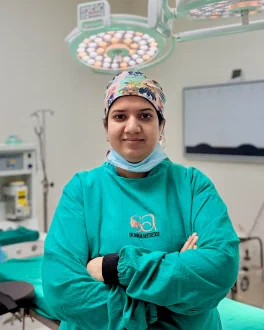
This guide should help you sort through which direction fits your concerns after pregnancy and breastfeeding. It’s not a substitute for a physical exam. You’d still need a consultation with Dr. Shikha Bansal to assess skin quality, volume, nipple position, asymmetry, and your longer term plans before arriving at a recommendation.
Who this article is for
This is for women who:
- feel their breasts look emptier, lower, heavier, or less symmetrical after pregnancy or breastfeeding
- aren’t sure whether they need a breast lift, breast augmentation, breast reduction, or breast fat transfer
- want a practical decision guide, not a procedure-by-procedure sales pitch
- are trying to time surgery around breastfeeding, childcare, work, weight stability, and future pregnancies
If you’re comparing options in Gurgaon or Delhi NCR and want a calm, consultation-first explanation of what each procedure actually does, this should be useful.
What commonly changes after pregnancy and breastfeeding
Postpartum breast concerns tend to fall into one or more of these patterns:
- Loss of upper fullness or overall volume
- Stretched skin and a lower breast position (called ptosis)
- Larger, heavier breasts that cause physical symptoms
- Asymmetry that becomes more noticeable after pregnancy or breastfeeding
- Side fullness near the bra line or underarm area
These changes happen because breast tissue, the skin envelope, fat distribution, glandular activity, and body weight all shift during and after pregnancy. Two women wearing the same bra size can end up needing completely different procedures.
In consultation, the first questions are usually:
- Is the main concern too little volume, too much volume, or a position problem?
- Has the nipple-areola complex dropped below the breast crease?
- Is the skin loose enough that adding volume alone would still leave the breast sitting low?
- Are there symptoms like neck pain, shoulder grooves, rashes, or trouble exercising?
- Is the patient done breastfeeding and close to a stable weight?
Those answers shape the surgical plan far more than cup size.
Postpartum breast surgery decision table
| Main concern after pregnancy | What it usually means anatomically | Procedure direction worth discussing |
|---|---|---|
| Breasts look deflated but nipple position is still reasonable | Volume loss is the main issue | Breast augmentation or breast fat transfer |
| Breasts sit lower and nipples point downward or fall below the crease | Skin laxity and ptosis matter more than volume alone | Breast lift, sometimes combined with augmentation |
| Breasts feel too heavy and cause neck, shoulder, back, or posture symptoms | Excess tissue and weight are part of the picture | Breast reduction, sometimes with lift principles built in |
| One breast changed more than the other | Volume and shape differences need separate planning per side | A tailored plan, possibly combining lift, augmentation, or reduction |
| Mild hollowing with a preference for subtle change, no major ptosis | Small volume gap with a desire for modest enhancement | Breast fat transfer in selected patients |
This table is a starting point, not a diagnosis. Many postpartum patients fall somewhere between these categories.
When the main issue is volume loss
Some women don’t feel their breasts are especially low or heavy. They feel “empty,” particularly up top. Clothes fit differently. The breasts look flatter without a bra than they did before kids.
If volume loss is the primary concern, breast augmentation is one direction to explore. It can restore upper fullness and give the breast more projection. For women who want something subtler and have enough donor fat, breast fat transfer may also work.
What matters here is whether the skin and nipple position can actually support a volume-based approach. If the breast has dropped significantly, adding volume alone may make it look bigger without truly fixing the droop. This is one of the most common mix-ups we see after pregnancy.
Example scenario
A woman says, “I like my size in a bra, but without support they look empty and flat on top.” If her nipple position is decent and the skin isn’t too loose, augmentation or fat transfer can be part of the conversation. But if the nipple has dropped a lot, she may still need a lift even with added volume.
When the main issue is sagging or ptosis
A lot of postpartum patients ask about implants when what they’re actually describing is descent of the breast and nipple. A breast lift is what addresses position, skin excess, and reshaping of the breast mound.
A lift comes into the picture when:
- the nipples sit lower than before and may point downward
- the breast tissue has dropped, even though some volume remains
- the skin feels stretched from pregnancy or breastfeeding
- the breast looks lower rather than simply smaller
This is where anatomy really matters, and how far the nipple has dropped relative to the breast crease is what settles it. More volume doesn’t solve every lift problem. In fact, doing augmentation alone on a breast that mainly needs lifting can leave it heavier while the lower position stays only partly corrected.
Dr. Shikha Bansal’s approach in consultation is to separate two questions: “Do you need more fullness?” and “Does the breast need to be repositioned?” Some women only need one of those. Others need both.
When the main issue is heaviness and symptoms
Not every postpartum concern is about lost fullness. Some women finish pregnancy and breastfeeding with breasts that are larger, heavier, and harder to carry comfortably. If the main problem is physical discomfort, breast reduction surgery may make more sense than a lift or augmentation, and it is priced differently too, as covered in this reduction mammoplasty cost guide for India and Gurgaon.
Reduction tends to come up when there are symptoms like:
- neck, shoulder, or upper back pain
- bra strap grooving
- difficulty exercising or maintaining good posture
- recurring skin irritation under the breasts
- just feeling top-heavy throughout the day
Reduction is about symptom relief and proportion, not just going down a cup size. A patient may want to look more balanced, move more freely, and get rid of that constant physical weight. Because reduction also reshapes and lifts the breast, many women are surprised that it handles both the heaviness and the contour when weight is the core complaint.
Example scenario
A woman says, “My breasts aren’t empty. They feel bigger and lower, and my neck hurts more than it used to.” That picture usually calls for a reduction-focused discussion, not an implant-focused one.
When asymmetry changes the plan
Pregnancy and breastfeeding don’t always affect both sides equally. One breast may lose more volume, sit lower, or stay larger. If asymmetry is a concern, the plan may need to be different on each side — and how much breast asymmetry is normal, and when it needs a scan first, is worth reading before you decide anything.
This is a big reason why an in-person exam matters. A patient might assume she needs the same thing on both sides, but the surgeon may find:
- one breast needing more lift than the other
- one side with more volume loss
- a real difference in nipple position
- asymmetry in chest wall shape or skin stretch
Balanced results here depend on customized planning, not a one-size approach.
Where fat transfer fits after pregnancy
Breast fat transfer is best understood as a contour and modest-volume option, not a replacement for implants or lifts. It’s worth discussing when a woman:
- wants a subtle increase, not a big size jump
- has enough donor fat
- prefers using her own tissue over an implant
- has mild volume loss without significant ptosis
It’s less suitable when the main concern is obvious sagging, very limited donor fat, or a desire for a larger size change. In those situations, fat transfer alone probably won’t deliver the structural correction or volume the patient is hoping for.
Expectations should stay grounded here. Fat survival varies from patient to patient, and the procedure works better for refinement and moderate enhancement than dramatic reshaping.
When combining procedures comes up
Postpartum anatomy doesn’t always fit one neat category. Some women have both deflation and ptosis. Others have heaviness plus descent. Combined procedures come up in consultation for exactly that reason.
Common examples:
- Lift with augmentation when a woman needs repositioning and more fullness
- Reduction with reshaping when she needs less weight and better contour
- Volume adjustment with lift when asymmetry is significant
Combining procedures can improve the balance between shape, position, and fullness, but it also changes the discussion around scars, recovery, and trade-offs. The right answer depends on your anatomy, goals, tissue quality, and honestly, how much change you actually want.
Why timing, weight stability, and future pregnancy plans matter
Even a well-chosen procedure is harder to plan if the timing is off. Postpartum breast surgery is easier to assess when:
- breastfeeding has stopped and the breasts have had time to settle
- weight is reasonably stable
- the body isn’t still going through major postpartum changes
- future pregnancy plans have been discussed openly
Timing after breastfeeding matters because residual fullness, glandular changes, and skin recoil may still be shifting for a while. If surgery happens too early, the breast you’re operating on may not be the one that eventually stabilizes.
Another pregnancy doesn’t make surgery impossible, but it does matter. A future pregnancy can change volume, skin stretch, and shape again. That doesn’t mean you have to postpone indefinitely, but it should be part of an honest planning conversation.
Example symptom scenarios
“My breasts look empty, but not especially heavy.”
This usually points toward augmentation or fat transfer, depending on how much volume is missing and whether there’s mild or more noticeable sagging.
“My breasts are lower, and the nipples look lower too.”
This is more of a lift conversation. If fullness is also gone, a lift plus augmentation might be discussed together.
“My breasts feel too large and uncomfortable after pregnancy.”
This tends to steer things toward reduction, especially if symptoms and proportional imbalance are affecting daily life.
“One breast changed more than the other.”
This usually needs a customized plan rather than picking one procedure off a list.
Surgeon commentary: what usually matters most in consultation
In a postpartum breast consultation, the most useful question isn’t “Which surgery is best?” It’s “What exactly changed in my anatomy?” Once you have that answer, the procedure choice becomes much more logical.
Dr. Shikha Bansal typically evaluates:
- breast volume relative to your frame
- skin quality and how much stretch there is
- nipple position
- asymmetry
- current symptoms
- scar preferences and tolerance for trade-offs
- whether you’re after a subtle change or something more noticeable
The final recommendation comes from that examination. Online guides can help you understand the categories, but they can’t replace measurements, tissue assessment, and a real conversation about what outcome would actually feel right for you.
When to speak with a plastic surgeon
Consider a formal consultation if:
- you’re unsure whether your concern is volume, sagging, heaviness, or some mix
- bras aren’t solving the shape or comfort problem anymore
- you’re planning surgery around work, childcare, or breastfeeding timelines
- asymmetry is making clothes fit poorly or affecting how you feel about your body
- you want a medically grounded recommendation instead of guessing between procedure names
If you’re considering treatment in Gurgaon or Delhi NCR, a consultation should focus on anatomy, options, trade-offs, and timing, not on selling you one procedure.
Frequently asked questions
Do I always need implants if my breasts look saggy after pregnancy?
No. Sagging doesn’t automatically mean implants. If the main problem is breast position and excess skin, a lift may be more appropriate than adding volume.
Can a breast lift make the breasts bigger?
A lift reshapes and repositions the breasts, but it doesn’t add much new volume on its own. Some women like the improved shape enough without augmentation. Others want added fullness too.
How do I know if I need breast reduction instead of a lift?
If heaviness, neck pain, shoulder grooves, rashes, posture problems, or exercise difficulty are major concerns, reduction may be more appropriate. The distinction depends on symptoms, tissue volume, and your goals.
Is fat transfer enough after breastfeeding?
Sometimes. Fat transfer can work for women with mild volume loss who want subtle enhancement and don’t have much ptosis. It’s usually not the best standalone option for more obvious sagging.
How long should I wait after breastfeeding before considering surgery?
There’s no single timeline that works for everyone. The important thing is to let breastfeeding stop and give the breasts enough time to settle so that planning is meaningful. Your surgeon can advise on timing based on your body and goals.
What if I plan another pregnancy later?
Bring that up before surgery. Another pregnancy can change breast size, skin stretch, and shape, which may affect how long the result lasts.
Next step
If you’re trying to decide between a lift, augmentation, reduction, or fat transfer after pregnancy, the most useful thing you can do is stop thinking in terms of procedure names and start thinking about what actually changed. Is the issue volume loss, ptosis, heaviness, asymmetry, or some combination?
If you’d like individualized guidance, you can book a consultation with Dr. Shikha Bansal to discuss which postpartum breast surgery plan fits your body, symptoms, and future plans.