A scar that still pulls or draws the eye a year after the original surgery or injury raises a practical question: which of the scar revision doctors in Gurgaon is actually equipped to fix it? Not every scar needs the same hands. A widened surgical scar across the abdomen calls for a different technique than a raised keloid on an earlobe or a contracted scar near a joint, and getting the technique choice right depends on reading the scar correctly at the very first visit.
This post lays out what separates a scar revision surgeon worth booking from one to skip, from credentials to consultation questions to how surgical revision differs from non-surgical treatment. In a market where dozens of Gurgaon clinics advertise “scar removal,” the distinction between a plastic surgeon with formal reconstructive training and a general aesthetic clinic running laser sessions matters more than most patients realize before they book.
Who this article is for
This guide is written for:
- Anyone with a scar, whatever its original cause, that hasn’t improved 12+ months after healing and is weighing scar revision surgery.
- Patients comparing non-surgical scar removal treatment against surgical revision for a stubborn keloid or hypertrophic scar, including anyone treating a keloid scar after an ear piercing.
- Anyone building a credential checklist before committing to any Gurgaon cosmetic procedure: the same vetting applies when choosing a rhinoplasty surgeon.
- Patients who want a realistic sense of surgical scar revision cost before booking a first consultation.
What does scar revision surgery actually involve?
Scar revision surgery re-opens or reshapes an existing scar to make it flatter and narrower, or better aligned with the skin’s natural tension lines. It does not erase a scar completely, and no responsible surgeon promises a scar-free result. Common techniques include simple re-excision with layered closure for widened or discoloured scars, Z-plasty to lengthen and release a scar that has contracted across a joint or crease, or W-plasty to break up a long straight scar so it is less noticeable, and staged excision with tissue expansion for larger scars that can’t be closed in a single sitting. Technique choice depends on the scar itself (size, location, age) and whether it is hypertrophic (raised but confined to the original wound) or keloid (raised and spreading beyond it). As with any surgical procedure, scar revision carries standard risks such as infection and bleeding, and, when general anaesthesia is used, an anaesthesia-related complication; these should be discussed at consultation. The revised scar can also widen again, thicken, or (in keloid-prone skin) recur, and some scars need more than one procedure to reach the goal.
The revised scar is a new scar: expect redness and firmness for several months, with the final result judged at 12 to 18 months. Sun protection and silicone therapy help during this period.
Which technique fits which scar
Widened scars often improve with re-excision and layered closure, though scars in high-tension areas can widen again; discolouration alone is usually treated non-surgically first. Contracted scars crossing a joint or skin crease, common after burns or lacerations, often need Z-plasty to release the contracture and redirect tension along natural skin lines. Extensive burn or traumatic scars sometimes require staged excision with tissue expansion across multiple surgeries. Keloid scars are the exception: because excision alone carries a high recurrence risk, injections are tried first, with surgery reserved for cases that don’t respond. This is detailed further in this comparison of keloid treatment options.
When is scar revision not the right first step?
Scars need time to mature before revision is considered. Most surgical scars are given 12 to 18 months, and burn or traumatic scars often longer, because scars continue to improve on their own during that window without any intervention. Revising a scar too early risks operating on tissue that would have improved anyway, and can leave a second scar to manage alongside the first. The exception is a contracture that limits movement or function, which may be released earlier. Early silicone or pressure therapy is often recommended while the scar matures.
How do you find the best scar doctor for your case?
For surgical scar revision, the right doctor is a plastic surgeon trained in reconstructive technique, not necessarily the clinic advertising the most aggressively for “scar removal.” Before booking, confirm three things: a recognized surgical qualification such as MCh Plastic and Reconstructive Surgery, active registration with the State Medical Council, and documented experience with the specific scar type in question, since technique and recurrence risk vary by scar type. This is where scar revision doctors in Gurgaon genuinely differ: reconstructive training isn’t universal even among surgeons advertising cosmetic procedures.
Credentials worth verifying
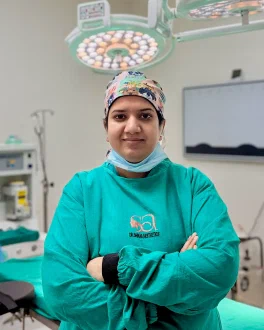
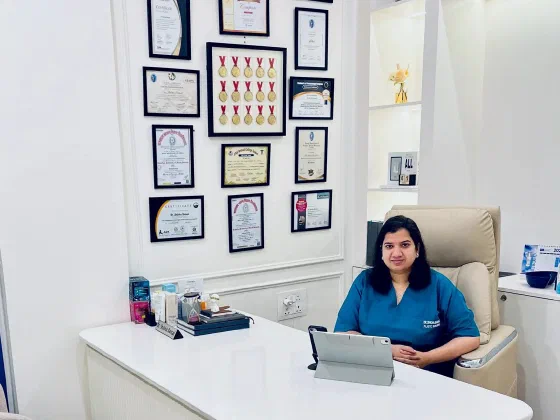
A surgical qualification in plastic and reconstructive surgery (MCh, or an equivalent recognized postgraduate degree) is the baseline, followed by active registration with the relevant State Medical Council; both are public information a clinic should share without hesitation. Society memberships, such as IAAPS or ISAPS, add a layer of ongoing peer accountability, though membership alone isn’t a substitute for checking the surgical qualification directly. In her practice, Dr. Shikha Bansal’s registration is publicly listed: MCh Plastic & Reconstructive Surgery from SMS Medical College, Jaipur, and Haryana Medical Council Reg. No. 24859. Any legitimate surgeon’s credentials can be verified the same way before booking.
Questions to ask before you commit
- Can you see before-and-after photos of a similar scar type, not just the surgeon’s best-case results?
- What is the surgeon’s approach if the scar under-corrects or partially recurs after the first revision?
- Is the procedure performed in an accredited operating theatre with anaesthesia support appropriate to the technique (the same theatre-setup question worth asking when choosing a liposuction surgeon)?
- What does the follow-up schedule look like, and how many sittings does the quoted cost actually cover?
Is non-surgical scar removal treatment enough, or do you need surgery?
Non-surgical scar removal treatment (fractional laser resurfacing, microneedling, silicone sheeting, and steroid or 5-FU injections) can meaningfully improve a scar’s colour and texture, and is usually tried before surgery for keloid and hypertrophic scars. Surgical revision becomes the better option once a scar is structurally problematic (excess width or a joint contracture) or has already recurred after injections; these issues don’t respond to topical or laser therapy alone. Many surgical plans combine both: excision to correct the scar’s shape, followed by laser or steroid therapy at the stage your surgeon advises to manage residual colour and thickening; for keloids, injections often start at the time of surgery or within the first few weeks. These carry their own risks, including darkening of the skin after laser in Indian skin types, and thinning or lightening of the skin after steroid injections, so settings and dosing should suit your skin.
Keloid scars deserve a separate note: because they can recur after excision alone, the sequence (injections first, surgery reserved for treatment-resistant cases) matters more than which single technique is “best.” Scar location matters too: a keloid on an earlobe carries a different recurrence risk than one on the chest or shoulder.
Scar Revision Cost and Planning in Gurgaon
Surgical scar revision cost (also searched as surgery scar removal cost or surgical scar removal cost) depends on several variables: the scar’s size and location, the technique used (simple excision versus a staged revision with grafting), the anaesthesia required (local versus general), and, for laser-assisted plans, the number of sittings bundled in. Because these variables shift the estimate meaningfully, no responsible practice quotes a fixed number without seeing the scar; an in-person consultation is the only way to get an accurate “starting from” figure.
The procedure fee generally covers the surgeon’s fees and anaesthesia, plus facility use and follow-up visits for suture removal and dressing changes; laser-assisted plans usually price per sitting rather than as a single fee. A full cost breakdown by scar type and technique is covered in this dedicated guide to scar revision surgery cost in India.
Frequently Asked Questions
What is the difference between scar revision surgery and scar removal treatment? Scar revision surgery re-cuts and re-closes a scar to change its shape or width, while scar removal treatment usually means non-surgical options like laser or injections that improve colour, texture and thickness without re-cutting the scar. Surgeons often combine both: surgery to correct shape, then laser therapy once healed to refine the result.
How much does surgical scar revision cost in India? Surgical scar revision cost in India depends on the specific scar and the technique and anaesthesia it needs, so it’s usually quoted as a “starting from” range rather than a fixed price. A full cost breakdown by scar type is covered in this dedicated guide; an accurate quote needs an in-person consultation.
Can a scar be completely removed? No technique, surgical or non-surgical, removes a scar entirely; the realistic goal of scar revision surgery is a less noticeable scar, not an invisible one. Any surgeon promising a completely scar-free result is a claim worth questioning.
How long should you wait after surgery or injury before scar revision? Most surgical scars are given 12 to 18 months to mature before revision is considered, since scars continue to soften and fade on their own. Burn and larger traumatic scars often need longer, and a scar still actively changing is generally not a good candidate for immediate revision.
Does surgery scar removal cost more than laser-based scar removal therapy? Surgical revision is typically a higher one-time cost than a single laser session, but scar removal therapy for a stubborn or keloid-prone scar often needs multiple sittings, which can add up to a comparable or higher total over time. The right comparison depends on the scar type: cost should be weighed against which approach is actually likely to work for that specific scar.
Will a scar revision surgeon still operate on a scar that already failed laser treatment? Often, yes, but it depends on the scar type. A widened or contracted scar that laser could not improve is often a good candidate for surgical revision. A keloid that recurred after excision usually needs excision combined with injections, pressure or radiotherapy, not repeat surgery alone. Sharing the full treatment history upfront shapes both the technique and the follow-up plan.
Scar revision works best when the technique is matched to the specific scar rather than applied as a one-size-fits-all fix, and that match is easiest to get right with an in-person examination rather than a photo sent over WhatsApp. This article is general information only and isn’t a substitute for personalized medical advice; consult a qualified plastic surgeon before deciding between surgical revision and non-surgical scar removal treatment. Book a consultation to have the scar assessed directly and to get a realistic technique and cost plan.