Most people searching for a rhinoplasty surgeon in Gurgaon end up comparing before-and-after photo galleries and price quotes, without a clear way to tell whether a surgeon is actually qualified to operate on a nose. Rhinoplasty is one of the more technically demanding procedures in cosmetic surgery — it reshapes cartilage and bone in a structure with almost no room for error, and a poor outcome is difficult and expensive to correct. This post sets aside the procedure explainer that most searches turn up and focuses instead on a buyer’s checklist. It opens with what to verify before booking, moves into what to ask during the consult itself, then closes with the sales tactics that should raise concern before money changes hands.
The information below is general and does not replace an in-person medical evaluation. Every point here is meant to be used at any clinic, not only in Gurgaon, though registration verification and clinic-density context are specific to this city.
Who this article is for
- Someone who has shortlisted 2-3 clinics after searching “rhinoplasty surgeon Gurgaon,” “best rhinoplasty surgeon in Gurgaon,” “rhinoplasty doctor in Gurgaon,” or “rhinoplasty surgeon near me” and needs a way to compare them beyond price
- A patient who has already had one rhinoplasty and is researching what went wrong before considering revision surgery
- A reader trying to understand how Indian nose anatomy affects the surgical plan before committing to a surgeon
- Family members helping a patient evaluate a quoted price against what the fee actually includes
- Anyone applying the same vetting logic to other cosmetic procedures, since the checklist below mirrors what should be asked before choosing a breast augmentation surgeon, a liposuction surgeon, or a scar revision surgeon in Gurgaon, and what a parent should ask before otoplasty for prominent ears, where the same quote questions appear in the otoplasty cost breakdown
What is rhinoplasty, and why does the surgeon’s technique matter?
Rhinoplasty is a surgical procedure that reshapes the nose by adjusting cartilage and bone, occasionally along with the overlying skin envelope, performed through either an open approach (a small external incision at the columella) or a closed approach (incisions hidden inside the nostrils). The choice between open and closed technique, and whether cartilage grafts are needed, changes both the surgical plan and the recovery course. A surgeon who cannot explain this choice for a specific nose is a warning sign in itself, not a technical detail to skip past.
Open vs closed rhinoplasty
Open rhinoplasty gives a fuller view of the nasal framework and is generally used for more complex reshaping, tip work, or revision cases, at the cost of a small external scar that generally fades over months. Closed rhinoplasty avoids the external incision and may suit patients needing more limited dorsal or bridge correction, with a shorter external swelling phase in some cases. Neither approach is universally “better”: the surgical plan should follow the anatomy and the goal, not a clinic’s default marketing package. A surgeon who proposes the same technique for every patient regardless of nasal anatomy has not individualized the plan.
Structural grafting and ethnic considerations
Indian and South Asian noses often present thicker skin and weaker lower lateral cartilage, along with a different dorsal profile compared to the Caucasian noses used in many international training references — a combination that changes how much structural support a surgical plan needs. A surgeon working on Indian anatomy without discussing cartilage grafting (septal, conchal, or occasionally costal) may be underestimating the support the tip needs to hold its shape over years, not just months. This is covered in more depth in a separate piece on Indian nose anatomy and ethnic rhinoplasty considerations.
Who is a good candidate for rhinoplasty?
A good candidate has finished facial growth (generally 18 years or older) and has a specific, describable concern about nasal shape or function. General health should be stable, without uncontrolled bleeding disorders, and expectations about what surgery can change should be realistic. Candidacy also depends on skin thickness, cartilage strength, and whether the concern is purely cosmetic or includes breathing difficulty from a deviated septum, since combined septorhinoplasty changes the surgical scope and consent discussion. A surgeon assessing candidacy should examine the nose physically, both internally and externally, before giving any commitment on outcome, not from photographs alone.
Patients with an active skin infection near the surgical site or uncontrolled thyroid disease generally need additional evaluation before a date is booked. The same applies to smoking habits that have not been addressed pre-surgery, or unresolved body dysmorphic concerns about appearance — either warrants a documented reason for deferral rather than a booking on the spot. A consult that skips this screening and moves straight to scheduling surgery is rushing a decision that should not be rushed.
Five questions to ask before booking a rhinoplasty consult in Gurgaon
Before booking any rhinoplasty consult, five questions separate a genuine surgical evaluation from a sales pitch. A surgeon or clinic that answers all five directly, with documentation available, has cleared the first filter — one that deflects any of them warrants a second opinion before any booking fee is paid.
1. What are your registered qualifications, and can they be verified?
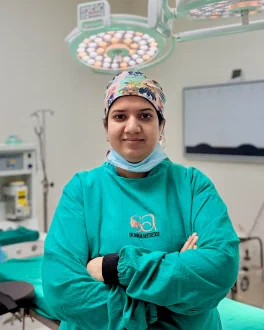
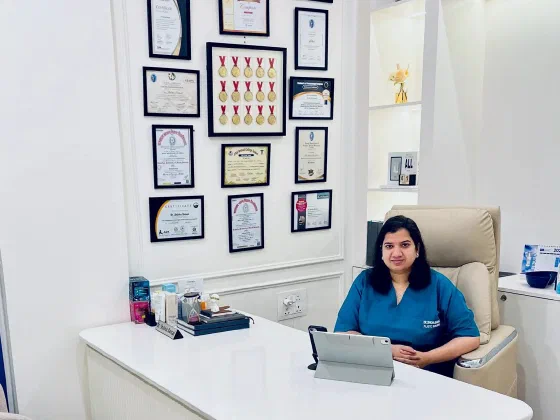
Ask specifically for the medical council registration number and the state council it is issued by, not just a degree name printed on a website. In India, plastic surgery requires an MCh (Master of Chirurgiae) in Plastic and Reconstructive Surgery, which follows an MBBS and typically an MS in General Surgery. A short-term “cosmetic surgery” certificate course is not equivalent to this training pathway and does not carry the same surgical scope. Any registered medical practitioner in Haryana can be looked up on the Haryana Medical Council’s registry, and Delhi-trained or Delhi-based surgeons practicing in Gurgaon should be able to produce either a Haryana registration or a valid reason they are registered elsewhere. As a reference point, Dr. Shikha Bansal holds MBBS (Gold Medalist), MS General Surgery, and MCh Plastic & Reconstructive Surgery from SMS Medical College, Jaipur (2022), with Haryana Medical Council Registration No. 24859: a specific, checkable registration number is what this verification should look like for any surgeon being considered.
2. Which technique is recommended, and why this one specifically?
The answer should reference the patient’s own nasal anatomy (skin thickness, cartilage strength, septal deviation, tip projection), not a generic explanation copied across every consult. If open rhinoplasty is proposed, the surgeon should explain what access it provides for this particular case; if closed, why the correction does not need that access. A vague answer like “we always do it this way” without anatomical reasoning suggests the plan was not individualized.
3. What is your personal revision rate, and how are revisions handled?
Revision rates in rhinoplasty are meaningfully higher than in most other cosmetic procedures because of the complexity of nasal healing, and a surgeon who claims a zero percent revision rate across their practice is either inexperienced with rhinoplasty specifically or not being transparent. A reasonable answer discloses an approximate rate, distinguishes minor touch-ups from full revision, and explains the clinic’s policy on cost and timing if a revision becomes necessary. Clinics that avoid this question entirely, or treat it as an inappropriate one to ask, are avoiding accountability that should be part of informed consent, a pattern discussed further in the piece on when to consider revision rhinoplasty.
4. How do the before-and-after photos hold up under scrutiny?
Genuine before-and-after sets use matched lighting and angle, with the same camera distance for both photos, and are typically taken at a standard post-operative interval (often 6-12 months) rather than at peak swelling reduction only. Photos that show dramatic changes achievable only through camera angle tricks, different lighting between the two shots, or results that look identical across every patient regardless of starting anatomy should be treated with skepticism. Ask whether the photos shown are of patients treated personally by the surgeon being consulted, since some clinics display a shared photo library across multiple doctors on staff.
5. Can a firm price be given before a physical exam?
A rhinoplasty quote given over a phone call, WhatsApp message, or brief video consult without an in-person or detailed video examination of the septum and external nasal anatomy is a pricing red flag, not a convenience. Nasal anatomy varies enough between individuals that surgical time and anesthesia complexity — plus whether grafting is needed at all — cannot be reliably estimated without an exam. A firm number offered too early is typically a placeholder to get a booking commitment, with the real figure revised upward at the pre-surgery stage. A legitimate quote is described as an estimate pending physical evaluation and is confirmed only after that exam takes place.
Red flags to watch for in a rhinoplasty consult
Five patterns should raise concern regardless of how polished a clinic’s marketing looks. No verifiable medical registration is displayed. Before-and-after photos look implausible or inconsistent. High-pressure tactics push an immediate booking (limited-time discounts, “only slot this month”). There is reluctance to discuss revision rates or complication protocol. And the specific technique or anesthesia type stays vague. Any one of these alone might have an innocent explanation; two or more together generally justify walking away and getting a second consult elsewhere.
Unrealistic before-and-after standards deserve particular attention because they set expectations that surgery cannot reliably meet. A nose that changes shape dramatically while the rest of the face stays identical between “before” and “after” photos is a signal of digital editing or selective case display rather than a typical surgical outcome. Pressure-selling around EMI offers or “book today” pricing discounts is a business tactic, not a medical one, and should not influence a surgical decision made on this scale.
What a genuine consultation visit should include
A proper rhinoplasty consult includes a physical examination of external nasal shape and internal septal anatomy, a discussion of surgical goals against what is anatomically achievable, and disclosure of technique and anesthesia type along with the expected recovery timeline and revision policy. A price sheet alone does not cover this ground. Many clinics now offer 3D imaging software to simulate a possible outcome, which can help align expectations, though it should be presented as an approximation rather than a guarantee of the final result. The consult should also cover the complication protocol: what happens if there is excessive bleeding, infection, or asymmetry during healing, and who is reachable for follow-up in that scenario.
A consult that rushes through these points in under fifteen minutes, or defers most of them to “we’ll discuss on surgery day,” has not given the informed-consent process the time it needs. Booking should generally follow a consult where all of the above were addressed, not precede it. In her Gurgaon practice, Dr. Shikha applies this same sequence before any rhinoplasty date is confirmed: physical exam first, technique discussion second, price last.
Gurgaon context: cost, registration checks, and clinic density
Rhinoplasty fees in Gurgaon clinics vary by technique, grafting need, and whether septoplasty for breathing correction is combined into the same surgery — a full breakdown of what a quote should include is covered separately in the rhinoplasty cost breakdown for Gurgaon. A quoted “starting from” fee should specify what it includes: surgeon’s fee, anesthesia, operating room charges, one follow-up visit, post-operative splint. Packages that appear cheaper on the surface sometimes exclude anesthesia or facility charges billed separately later.
The Sector 43 and Sushant Lok corridor in Gurgaon has a high density of cosmetic and plastic surgery clinics competing for the same search terms, which makes credential verification more useful here than in areas with fewer options. Patients broadening a search for the rhinoplasty India best surgeon options beyond Gurgaon can apply this same registration-and-technique checklist in any city; the verification steps do not change with location. A crowded market gives patients more opportunity to compare registrations side by side before booking. Checking a surgeon’s registration with the Haryana Medical Council (or confirming a valid alternate-state registration with a documented reason for practicing in Haryana) takes a few minutes and should be a standard step before any consult, the same way a patient would check a specialist’s registration before any other surgical procedure.
Frequently asked questions
How do I find the best rhinoplasty surgeon in Gurgaon? Start by verifying medical registration (MCh in Plastic and Reconstructive Surgery, registered with the Haryana Medical Council or a valid equivalent). From there, compare revision-rate transparency and technique explanation specific to individual anatomy, weighing consultation thoroughness ahead of price alone or photo galleries in isolation.
What is the difference between a rhinoplasty specialist in Gurgaon and a general cosmetic surgeon? A rhinoplasty specialist in Gurgaon has specific MCh-level plastic surgery training and typically performs a higher volume of nasal procedures, while a general cosmetic surgeon may offer rhinoplasty alongside many unrelated procedures without the same concentration of nasal-specific experience. Asking directly about case volume in rhinoplasty specifically is a reasonable follow-up question.
Is a rhinoplasty hospital in Gurgaon safer than a standalone clinic? Hospital-affiliated setups generally provide on-site anesthesia backup and emergency protocols that some standalone cosmetic clinics may lack, though a well-equipped, accredited standalone facility with a qualified anesthesiologist present can also meet safety standards. The deciding factor is documented accreditation and anesthesia support, not the label “hospital” versus “clinic” alone.
How long does rhinoplasty recovery take? Initial swelling and bruising generally reduce over the first 2 weeks, with a splint removed around 7-10 days; most visible swelling around the tip and bridge continues to settle gradually over 3-6 months, and final refined results are typically assessed closer to 12 months. A full week-by-week account is covered in rhinoplasty recovery week by week.
Can rhinoplasty be combined with septoplasty for breathing problems? Yes — septorhinoplasty combines cosmetic reshaping with correction of a deviated septum to improve breathing, and this combination should be discussed openly at consult if any breathing difficulty exists, since it changes both surgical planning and consent. Not all septorhinoplasty surgeons handle the same case mix, so it is reasonable to ask specifically about combined cosmetic-and-functional case volume rather than cosmetic rhinoplasty alone.
What happens if the first rhinoplasty result is unsatisfactory? Revision rhinoplasty is a recognized, more technically demanding secondary procedure, generally recommended only after the nose has fully healed, typically a minimum of 12 months, and sometimes longer, to allow accurate assessment of what needs correction; details on timing and candidacy for a second surgery are addressed in the revision rhinoplasty guide.
This checklist is meant to be usable at any clinic in Gurgaon, not only one practice — registration verification, technique transparency, and revision-rate disclosure are reasonable questions to bring to any consult. This information is general and not a substitute for a physical evaluation by a qualified plastic surgeon. Book a consultation to have nasal anatomy assessed directly and to have these questions answered in person.