
“Is it just extra skin, or is my eyelid actually drooping?” That question sits underneath most enquiries about eye surgery for the upper eyelid. A heavy upper lid can make the eyes look smaller and tired, cut into the top of the field of vision, and leave the forehead aching by evening from holding the brows up.
The same heavy look has three different causes: too much skin, a lid-lifting muscle that has stretched, and a brow that has dropped. Each needs a different operation, and removing skin from a lid whose real problem is the muscle or the brow is the classic way upper-lid surgery disappoints. This post covers how to tell the three apart, a mirror check, what each cause needs, and what combined upper-lid and ptosis surgery means.
This is general information only and not a substitute for medical advice from a qualified plastic surgeon who has examined your eyes.
Who this article is for
- Adults whose upper lids look heavier or more hooded than they used to
- People told “it is only extra skin” who want to check before surgery
- Anyone who catches themselves raising their eyebrows to see clearly
- People whose eye still looks sleepy after an earlier upper blepharoplasty
- Those researching upper eyelid surgery in Gurgaon who want the diagnosis settled first
For recovery and general risks, see the blepharoplasty guide. Under-eye bags are covered in lower eyelid surgery for under-eye bags.
Why does a hooded eyelid happen?
A heavy or hooded upper eyelid has three common causes that can look identical in a photograph. Excess skin (dermatochalasis) folds over a lid that still sits at a normal height. Eyelid ptosis means the lid edge itself sits too low because its lifting muscle has stretched. Brow ptosis means the eyebrow has descended and pushes skin onto the lid. Many people over 50 have more than one.
Excess skin (dermatochalasis)
Eyelid skin is the thinnest on the body and loses elasticity with age. The surplus folds over the crease and can rest on the lashes, but the lid margin, where the lashes grow, stays at its normal height. Lift the fold and the eye underneath looks open.
A weak lid muscle (eyelid ptosis)
The upper lid is raised by the levator muscle, which attaches through a thin sheet called the aponeurosis. In adults this attachment tends to stretch with age, long-term contact lens wear, eye rubbing or previous eye surgery. The lid margin then rests lower over the iris, sometimes over the pupil, and lifting the skin does not open the eye.
Ptosis that appears suddenly, varies through the day, or comes with double vision, headache, an unequal pupil or weakness elsewhere is not cosmetic. It needs prompt medical evaluation before surgery is discussed.
A low brow (brow ptosis)
When the brow, especially its outer third, drops to or below the bony rim, it carries skin down onto the lid. Hooding is usually heaviest at the outer corner, and the forehead often shows deep lines from constant brow-raising.
A mirror self-check for a heavy upper lid
A two-minute mirror check can suggest which cause is likely, though it cannot replace an examination. Relax the forehead, note where the lid edge sits on the iris, then lift the skin and the brow in turn. If lifting the skin opens the eye, skin is the likely driver; if the lid edge stays low, suspect ptosis; if lifting the brow clears the hood, the brow is involved.
- Relax the forehead. Face a mirror, close your eyes briefly, then open them looking straight ahead. A fingertip on the forehead tells you if you are lifting your brows to see.
- Find the lid edge. A typical upper lid margin rests about 1 to 2 mm below the top of the iris. A margin covering much more, or reaching the pupil, suggests ptosis.
- Lift the skin. With a clean fingertip, gently lift the fold above the lashes without moving the brow.
- Lift the brow. Release the skin, raise the outer brow slightly and note how much of the hood disappears.
- Compare sides. Uneven lid edges between the eyes are common in ptosis.
| Likely cause | What you see | Mirror clue | What it usually needs |
|---|---|---|---|
| Excess skin | Fold over a normally placed lid edge | Lifting skin opens the eye | Upper blepharoplasty |
| Eyelid ptosis | Lid edge low over the iris or pupil | Lid stays low after lifting skin | Levator (ptosis) repair |
| Low brow | Hooding heaviest at the outer corner | Lifting the brow clears the hood | Brow lift, lid reassessed after |
Upper eyelid surgery blepharoplasty vs ptosis repair: what each cause needs
Each cause has its own operation. Excess skin is treated with upper blepharoplasty, which removes a measured strip of skin through the natural crease. Ptosis is treated by tightening or reattaching the levator, which raises the lid edge itself. A low brow is treated with a brow lift first, after which the lid is reassessed, because the skin excess often looks smaller once the brow is back in place. This can be done in the same sitting, with the brow set first and the lid skin measured afterwards, or as separate stages.
Most adult ptosis is corrected by reattaching the stretched aponeurosis to the lid’s firm plate (the tarsus), usually through the same crease incision used for blepharoplasty. Mild ptosis is sometimes corrected from the inner surface of the lid instead, usually when the lid lifts well with a test eye drop, and ptosis with very poor muscle function, more typical of congenital cases, needs a different technique. In a low-brow patient, removing lid skin alone can pull the brow lower and worsen the heaviness.
Why skin removal alone over an undiagnosed ptosis disappoints
The lid edge stays where it was, so the eye still looks sleepy, now with a cleaner crease that makes the low lid more obvious. Chasing the heaviness by taking more skin risks a lid that does not close fully. The brow-raising habit tends to continue, and a second operation is then often needed for the muscle.
Is upper eyelid surgery functional or cosmetic?
Upper eyelid surgery is considered functional when the lid or overhanging skin blocks part of the upper field of vision, and cosmetic when vision is unaffected. This is usually documented with a visual field test done twice, once with the lids in their natural position and once with the skin or lid taped up. A clear improvement with taping supports a functional indication.
Functional heaviness often shows as tilting the chin up to read, missing things in the upper part of vision such as overhead signs, or brow ache by evening. A pre-operative ophthalmology check is advised when there is dry eye, glaucoma, thyroid eye disease or any red-flag symptom above.
What does combined upper blepharoplasty and ptosis surgery mean?
Combined surgery corrects both problems in one sitting through one crease incision: the levator is tightened to raise the lid edge, and the excess skin is removed. It is planned when the examination shows both a low lid margin and a genuine skin surplus, a pattern that is common after 50.
Skin is marked conservatively and any final trim is made after the lid height is set, so skin removal matches the new lid height. Under local anaesthesia with light sedation, the patient can open the eyes on request, which helps judge height and symmetry on the table.
Two effects are discussed beforehand. Once the lid lifts, the forehead tends to relax and the brows may settle slightly lower. Raising one drooping lid can also unmask a droop in the other eye, so both sides are assessed together. Lid height is the least predictable part of ptosis surgery. Some under- or over-correction or a small difference between the eyes is the most common issue, and a minority of patients need a second adjustment.
Ptosis repair has its own risks on top of those of blepharoplasty: uneven lid height or contour, a lid set too high or too low, and temporary difficulty closing the eye fully, which can make dry eye worse for a while. Rare complications such as bleeding behind the eye, which can threaten vision and needs urgent attention, or infection, are covered in the blepharoplasty guide.
Planning the assessment in Gurgaon
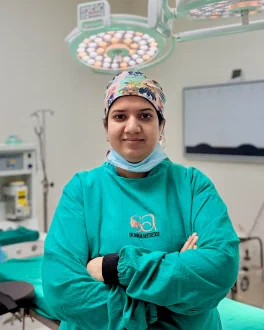
At the clinic in Sushant Lok 1, Gurgaon, the consultation settles the cause before surgery is discussed: lid height is measured, levator movement checked and brow position recorded. The assessment is done by Dr. Shikha Bansal (MBBS, MS General Surgery, MCh Plastic and Reconstructive Surgery). In her practice, Dr. Shikha sees skin excess and a mild ptosis together often enough that both are checked in every heavy-lid assessment. Photographs from five to ten years ago help show what has changed. What moves the final quote is covered in what drives an eyelid surgery quote.
Frequently asked questions
Is upper eyelid blepharoplasty the same as an eyelid lift?
Usually, yes. An eyelid lift in plastic surgery normally means upper blepharoplasty, which removes excess skin. It does not raise a lid edge that sits too low, which needs ptosis repair.
Will droopy eyelid surgery fix a lid that covers my pupil?
Only if the operation addresses the muscle. A lid covering the pupil usually points to ptosis, corrected by levator repair, sometimes combined with skin removal. Skin removal alone tends to leave the lid edge where it was.
Is blepharoplasty for Asian eyes different?
Indian and Asian lids often have fuller fat and a lower crease, which can also hide a mild ptosis, so skin removal is typically more conservative. Creating a new crease is a separate procedure, covered in double eyelid surgery for Indian eyes.
What decides upper eyelid surgery cost in India?
Mainly the plan: skin removal alone, ptosis repair, a brow lift or a combination, along with anaesthesia and facility fees. The figures are explained in the eyelid surgery cost post linked above.
Can a hooded eyelid be fixed without surgery?
Non-surgical treatments do not remove excess skin or repair a stretched muscle. Botulinum toxin can lift the brow tail slightly in some people, which may soften mild outer hooding for a few months. Placement matters: toxin in the forehead can lower the brow and make hooding worse in people who rely on brow-raising to see, so it is planned after the lid has been examined.
A heavy upper lid is a diagnosis before it is an operation. Getting the cause right tends to give a more natural, open eye and helps avoid a second procedure. If the mirror check raised a question, consult a qualified plastic surgeon who can examine and measure the lids. Book a consultation