
The plaques are gone, the eyelid skin looks smooth, and then eight or ten months later a small patch of the same yellowish deposit shows up again in almost the same spot. Xanthelasma recurrence is the single most common follow-up question after removal, and it deserves a direct answer rather than blanket reassurance: these fatty plaques can return, and the reason has more to do with lipid metabolism than with which removal technique was used the first time. This post covers why xanthelasma comes back, how recurrence differs across removal methods, and what actually lowers the risk.
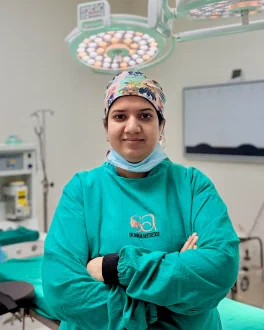
Xanthelasma itself is a benign collection of cholesterol-laden cells in the skin around the eyelid, not a tumour and not the same thing as the milia and syringomas it is often confused with, so removal is usually a cosmetic decision rather than a medically urgent one. Recurrence has been documented across every removal method: surgical excision, laser ablation, chemical cauterisation with trichloroacetic acid (TCA), and cryotherapy. Published rates vary by technique and lesion size, and by how well any underlying lipid disorder is managed afterward. In her practice, Dr. Shikha sees recurrence come up as the first question patients raise once they’ve decided to go ahead with removal, ahead of questions about scarring or cost.
Who this article is for
- Anyone who has already had xanthelasma removed and has noticed new yellowish plaques near the same site
- Anyone comparing xanthelasma removal methods and wanting to know which one holds up longest
- Anyone with high cholesterol, a lipid disorder, or a family history of xanthelasma who wants to understand personal recurrence risk
- Anyone weighing xanthelasma removal against a related eyelid concern, including droopy eyelid skin: the eyelid surgery guide covers how the two are assessed
- Anyone who wants a realistic expectation rather than a promise that removal is permanent
Why does xanthelasma come back after removal?
Xanthelasma comes back because removal treats the visible plaque, not the process that deposited cholesterol in the eyelid skin in the first place. Many patients with xanthelasma have some degree of dyslipidaemia (raised LDL cholesterol or triglycerides), even when a routine blood panel looks unremarkable, while a share of cases occur in people with normal blood lipid levels but locally abnormal fat-processing cells in that patch of skin. Because removal itself, whichever method is used, rarely corrects the driver behind the plaque, new deposits can form in adjacent eyelid skin over months to years. Recurrence is not automatically a sign the first treatment failed technically; it usually reflects the same process starting again nearby.
The lipid connection
A fasting lipid profile is a reasonable step before or after xanthelasma removal, even for patients who feel otherwise healthy, since correcting an unmanaged lipid disorder is one of the few interventions with any evidence of reducing new plaque formation over time. That management sits with a physician overseeing cholesterol, not with the surgical or dermatological removal itself — unmanaged lipid disorders, including under-treated cholesterol after removal, are believed to raise the risk of new plaques appearing.
Who tends to see it recur
Recurrence appears more often in patients who were younger at first presentation, started with larger or more numerous plaques, or have a strong family history of xanthelasma or a poorly controlled lipid disorder. None of these factors make recurrence certain — plenty of patients with one or more never develop a second plaque; they simply describe who a treating surgeon watches more closely at follow-up.
How common is xanthelasma recurrence after different treatment methods?
Published recurrence rates vary considerably across studies and overlap across techniques rather than falling into a clean ranking. Series on surgical excision report recurrence anywhere from under 10% to over 50%, depending on margin width and follow-up length. Surface-directed methods — treating the deposit without removing tissue at the same depth — span a similarly wide range; laser series alone have reported recurrence from under 10% to as high as 50%, varying by lesion size, number of lesions, and skin type. Excision is often favoured for larger or thicker plaques for reasons including margin control and single-session clearance, not because it reliably beats every other technique on recurrence. These figures span different populations and follow-up periods and describe a general pattern rather than a number that applies to any one plaque.
Xanthelasma removal surgery (excision)
Surgical excision removes the plaque along with a margin of adjacent skin, closing the eyelid with fine sutures. It tends to be favoured for larger or thicker plaques, particularly on the upper eyelid, and generally leaves a fine scar that fades along the natural eyelid crease. Reported recurrence still spans the wide range described above, shaped mainly by margin width and how long a study followed patients afterward.
Laser, TCA, and cryotherapy
Laser ablation (commonly CO2 or Er:YAG), TCA cauterisation, and cryotherapy are less invasive, usually done without stitches, and better suited to smaller or thinner plaques. The trade-off is a comparatively higher reported recurrence rate and, with TCA in particular, a real risk of pigment change or scarring if application isn’t carefully controlled on thin eyelid skin. Recurrence after these methods often shows up as small new deposits rather than a full return of the original plaque, a pattern that also shows up in how some benign lesions come back after excision in other tissue.
What can lower the risk of xanthelasma recurrence after treatment?
The interventions most consistently linked to lower recurrence are lipid management, adequate surgical margins where excision is chosen, and realistic staging for widespread plaques — none of which eliminate the possibility of recurrence, though they meaningfully reduce the odds.
Where lipids are raised, medical management targeting the systemic driver — diet and weight first, with statin therapy added where appropriate — matters more than anything done to the local plaque. Where plaques are extensive across both eyelids, staged treatment — clearing one area first and reassessing before the next — lets a treating surgeon judge response before committing to the full extent of removal, similar to the staged approach used for other recurrence-prone lesions such as keloids after piercing. Regular follow-up in the first one to two years also catches any new plaque while it’s still small, keeping a second procedure simpler than the first.
Cost and planning for xanthelasma removal in Gurgaon
Xanthelasma removal cost in and around Gurgaon typically starts from a range, with the method chosen making the biggest difference and plaque count or staging adjusting it further. A fee quoted without stating what it covers — the procedure itself, and whether a follow-up review is included — is hard to compare across clinics and worth asking about directly, given the recurrence risk.
For patients searching xanthelasma treatment near me or xanthelasma removal near me, xanthelasma removal at the clinic is assessed individually, weighing plaque size, eyelid skin thickness, and lipid history before recommending a method. Fees sit in a similar range to other benign facial lump removals — see this cost breakdown for lipoma removal for comparable minor-procedure pricing.
Frequently asked questions
Does xanthelasma treatment near me guarantee it won’t come back? No treatment can guarantee xanthelasma will never return, since recurrence is tied to lipid biology as much as to removal technique. A consultation can offer an honest estimate of relative risk, weighing plaque size and method against whether any lipid disorder is present and managed.
How soon can xanthelasma come back after treatment? Recurrence has been reported from several months to several years after removal, most often within the first one to three years. Regular follow-up in that window makes it easier to catch a new plaque early, while it’s still small.
Is xanthelasma removal surgery permanent? Surgical excision removes the existing plaque completely, but published recurrence rates overlap considerably across techniques, so “permanent” isn’t accurate for any of them — new plaques can still form in adjacent skin if the underlying lipid process continues. Excision is better described as durable rather than permanent.
What is the xanthelasma removal cost in Gurgaon? Cost starts from a range, shaped by the method used, how many plaques need treatment, and whether treatment is staged. A consultation is the most reliable way to get a number for a specific case, and the quoted fee should state what follow-up is included.
Can lifestyle changes stop xanthelasma from returning? The most modifiable recurrence risk in the literature is an unmanaged lipid disorder — addressed through diet, weight control, and medication where indicated — though prevention still isn’t guaranteed, especially when xanthelasma occurs alongside normal blood lipid levels.
Is xanthelasma removal near me safe for the eyelid area? Removal on eyelid skin, whatever the method, carries the ordinary risks of any procedure near the eye, including scarring, pigment change, asymmetry, and, less commonly, ectropion (the eyelid margin pulling away from the eye) — which is why eyelid anatomy experience matters when choosing a surgeon. This is general information only, not a substitute for an individual medical assessment.
Xanthelasma recurrence is common enough that it belongs in the first conversation about removal, not as a surprise afterward. A consultation with Dr. Shikha Bansal (MBBS, MS General Surgery, MCh Plastic & Reconstructive Surgery; Haryana Medical Council Reg No. 24859) can weigh plaque size, eyelid skin, and lipid history together and set realistic expectations for the method most likely to hold up in a specific case. This article is general information only and is not a substitute for medical advice from a qualified plastic surgeon. Book a consultation