
If you are considering a mommy makeover, it is natural to focus on what surgery may improve. But it is just as important to ask the harder questions: What are the risks of combining procedures? What kind of scars are usually involved? How do you tell normal recovery symptoms from warning signs? And when is staged surgery safer than doing everything together?
A responsible answer should be calm and honest. A mommy makeover is not one fixed operation. It is a personalized plan that may combine a tummy tuck, liposuction, a breast lift, breast augmentation, or selected combinations of these. Because the plan varies, the risk profile and scar pattern also vary.
This guide covers the main safety issues you should understand before combined surgery, how scars usually differ between the abdomen and breasts, what factors raise complication risk, and what postoperative symptoms deserve prompt attention. It is not a substitute for personal medical advice, but it can help you go into consultation with better questions and more realistic expectations.
If your main concern is what recovery may look like at home, this companion guide on mommy makeover recovery week by week may also help.
Who this article is for
This article may be especially useful if you are:
- close to making a decision and want a balanced safety discussion rather than reassurance-heavy marketing
- wondering whether combining abdominal and breast surgery is sensible in your case
- worried about anesthesia, drains, scars, swelling, or delayed healing
- trying to understand whether a staged plan may be safer than one long combined operation
- looking for practical questions to ask before choosing surgery
The first safety point to understand
Mommy makeover surgery is not automatically unsafe, but it should never be treated like a routine package. Safety depends on the exact procedures being proposed, how long surgery is expected to take, your medical history, your tissue quality, your weight stability, whether you smoke or use nicotine, and how realistic the recovery plan is for your life.
That is why two patients should not assume they face the same level of risk just because both are discussing a “mommy makeover.” One patient may be a good candidate for combined surgery with manageable recovery support at home. Another may be better served by fewer procedures or a staged approach because the overall operative burden would otherwise become too high.
The safest plan is not the most comprehensive-looking one on paper. It is the plan that fits your anatomy, health, and recovery capacity responsibly.
What risks are usually discussed in mommy makeover planning
Because mommy makeover surgery often combines procedures, you need to understand both general surgical risks and the extra planning issues that come with longer or broader operations.
General surgical risks may include:
- bleeding or blood collection
- infection
- fluid collection such as seroma
- delayed wound healing
- anesthesia-related problems
- blood clots and other circulation-related complications
- contour irregularity or asymmetry
- numbness or altered sensation
- unfavorable scarring
These possibilities do not mean complications are expected in every case. They mean that surgery should be planned with respect for real biology, not with a promise that careful technique makes risk disappear.
If the abdominal part of your surgery is the main concern, this more focused article on tummy tuck risks and complications can give additional detail.
How combining procedures changes the safety discussion
The main reason mommy makeover safety deserves separate discussion is that combined surgery is not the same as one smaller procedure done alone.
When abdominal surgery and breast surgery are performed together, the body may have:
- more than one operated area healing at the same time
- longer anesthesia exposure
- more swelling and more movement restriction early on
- more complex postoperative support needs
- a greater need for careful case selection and sensible limits
For example, a patient having a tummy tuck with muscle repair plus breast surgery may have both lower-body movement restrictions and upper-body soreness or limited arm comfort. Getting in and out of bed, changing position, and managing the first week can be more demanding than a single-procedure recovery.
This does not mean combined surgery should be avoided in every patient. It means the decision to combine procedures should come after proper examination and planning, not because a package sounds efficient.
When staged surgery may be the safer choice
Some patients assume that doing everything together is always smarter because there is only one main recovery period. In some cases that is true. In others, staged surgery may be the safer choice.
Staging may be considered when:
- the total procedure plan would otherwise become too extensive
- your medical history raises concern about wound healing or anesthesia burden
- smoking or nicotine use has not been fully addressed
- weight is still unstable
- your home or childcare support during recovery is limited
- it is better to correct one area first and reassess later
Choosing a staged plan does not mean you are a poor candidate. It may simply mean that safer sequencing is more appropriate for your body and situation.
Common recovery symptoms versus warning signs
One of the biggest causes of anxiety after surgery is that normal healing can still feel intense. Tightness, swelling, bruising, fatigue, and temporary numbness may all happen in a routine recovery. The question is whether symptoms are following an expected healing pattern or becoming more concerning.
| Common early recovery issues | Warning signs that need prompt review |
|---|---|
| swelling that slowly improves overall, even if it fluctuates | rapidly increasing swelling, especially if one side becomes tense or much larger |
| soreness, tightness, bruising, and fatigue | worsening pain that feels out of proportion or is suddenly escalating |
| temporary numbness or altered sensation near incisions | fever, spreading redness, or feeling increasingly unwell |
| mild asymmetry in swelling during early healing | foul-smelling drainage, unusual discharge, or a wound that appears to be opening |
| firmness or heaviness in healing areas | calf pain, sudden shortness of breath, chest pain, or any urgent breathing concern |
Patients sometimes worry about “overreacting” if they call early. In responsible surgical care, early communication is part of safe aftercare. If something feels clearly wrong, contact your surgeon’s team rather than relying on internet comparisons.
What scars usually come with a mommy makeover
Scars depend on which procedures are included. A mommy makeover does not create one single scar pattern.
If a tummy tuck is part of surgery, there is usually a lower abdominal scar, and in many full tummy tucks there is also a scar around the belly button. If breast surgery is part of the plan, scar pattern depends on whether you need a lift, augmentation, reduction, or a combination.
The most important point: scar placement can often be planned thoughtfully, but scar quality cannot be guaranteed. A scar may heal fine but still remain visible, darker, wider, raised, or slower to mature than expected. Healing biology differs from person to person.
For a more detailed abdominal scar discussion, this guide on tummy tuck scars, placement, and care may be useful.
Scar pattern overview by procedure combination
| Likely procedure combination | Typical scar areas to expect | Important scar note |
|---|---|---|
| Liposuction only | Small access-point scars | These are usually smaller than tummy tuck scars, but they are still real scars and can pigment or heal variably |
| Tummy tuck with or without liposuction | Lower abdominal scar, often plus umbilical scar in a full tummy tuck | More skin removal usually means a longer abdominal scar; low placement does not mean invisible |
| Breast augmentation only | Scar depends on implant approach and incision site | Augmentation scars are generally smaller than lift scars, but scar maturity still varies |
| Breast lift with or without implants | Around the areola and often vertical and/or lower breast fold scars | Lift scars are more extensive than augmentation-only scars because skin reshaping is involved |
| Tummy tuck plus breast surgery | Both abdominal and breast scars | This combination means healing is happening in more than one visible area at once |
Patients sometimes ask which scar is “worse.” That is not always the best way to think about it. The better question is whether the planned scar burden matches the amount of correction you are seeking, and whether you are prepared for scars to mature over months rather than days.
What can increase risk or slow healing
Several factors can raise surgical risk or affect recovery quality:
- smoking, vaping, or nicotine exposure
- uncontrolled diabetes, anemia, or other medical issues
- major weight instability
- poor nutrition or poor recovery planning
- previous scars or surgical history that affect blood supply or tissue movement
- unrealistic expectations about scars, recovery speed, or “perfect” results
- inability to arrange enough help at home
Nicotine deserves special attention because it can impair blood supply and wound healing. This matters even more in operations that involve skin tightening and longer incisions. If you have very limited support at home, that is not just a convenience issue. It is part of safe recovery planning.
What a safe consultation should cover
A responsible consultation should do more than confirm what procedure you want. It should assess whether the plan is reasonable for you.
That discussion should usually include:
- your full medical history, medication list, and prior surgeries
- whether your weight is relatively stable
- whether future pregnancy plans could affect timing
- whether smoking or nicotine cessation is needed before surgery
- a realistic explanation of the scars likely for your procedure mix
- whether the operation should be combined or staged
- what kind of facility and postoperative monitoring are appropriate
- what support you will need during the first days and weeks after surgery
If a consultation skips over these issues and focuses mainly on selling a package, that is a sign to slow down and ask more questions.
Questions to ask your surgeon about safety
Before deciding, it can help to ask direct questions such as:
- Which exact procedures are you recommending for me, and why?
- Do you think these procedures should be combined, or would staging be safer in my case?
- What are the main risks based on my anatomy, health history, and lifestyle?
- How long is surgery likely to be, and how does that affect planning?
- Will I need drains, compression garments, or overnight observation?
- What warning signs after surgery should make me call immediately?
- What kind of help should I arrange at home, especially if I have young children?
- What scar pattern should I realistically expect from the abdominal and breast parts of surgery?
- When can scar-care products or silicone-based treatments usually start, if appropriate?
- If healing is slower than expected, what kind of follow-up or revision discussion may become relevant?
These questions are not confrontational. They are part of informed consent and thoughtful planning.
What about numbness, swelling, and revision possibility?
These are common concerns and they deserve direct discussion.
Numbness
Temporary numbness or altered sensation can happen after body contouring or breast surgery because tissues are lifted and healing nerves take time to settle. Sensation often changes over time, but the pattern and duration vary. It should not be presented as identical for every patient.
Swelling
Swelling is expected after surgery, and it may improve unevenly rather than in a straight line. That said, persistent swelling, localized fluid collection, or sudden worsening should still be reviewed rather than dismissed.
Revision possibility
Most patients asking about revision are really asking whether healing and results are perfectly predictable. They are not. Even when surgery and aftercare are appropriate, some patients may later discuss scar management, contour refinement, or other adjustments, including what a scar revision would involve and cost. That is why surgeons should frame results honestly and avoid promising perfection at the start.
Basic scar care principles
Scar care depends on how your incisions are healing and on your surgeon’s protocol, but general principles often include:
- protecting incisions during the earliest phase of healing
- avoiding unnecessary tension on the closure
- using silicone gel or silicone sheets only when your surgeon says it is appropriate
- protecting scars from sun exposure
- avoiding smoking and nicotine
- understanding that scars may look more noticeable before they soften
Scar care products can support healing in selected patients, but they do not erase scars and they do not replace good wound healing.
Delhi NCR and Gurgaon planning considerations
For patients in Gurgaon, Gurugram, and the wider Delhi NCR region, safe planning is not only about the operation itself. Recovery logistics matter too. Long commutes, stairs, household help availability, and childcare demands can all affect how practical combined surgery really is.
That does not change surgical biology, but it does affect good decision making. A plan that sounds manageable in theory may feel very different when you consider travel, home responsibilities, and how much assistance you will realistically have in the first one to two weeks.
When to speak with a plastic surgeon
You should have a detailed consultation if:
- you are unsure whether the scar trade-off is worth it for your goals
- you want to know whether your procedures should be combined or staged
- you have prior C-sections, prior breast surgery, or healing concerns
- you smoke, have medical conditions, or have a history of difficult scars
- you need a realistic plan for recovery support at home
The most useful consultation is not one that gives blanket reassurance. It is one that explains your likely scars, your risk factors, your safety limits, and whether a combined plan is truly suitable.
Frequently asked questions
Is a mommy makeover safe?
It can be appropriate and safely planned in selected patients, but it should not be described as automatically suitable for everyone. Safety depends on patient selection, procedure extent, operative planning, facility standards, and aftercare.
Are mommy makeover scars always large?
Scar burden depends on the procedures included. A tummy tuck usually creates a more substantial abdominal scar than liposuction alone, and a breast lift creates more scar than augmentation alone. The exact pattern depends on your surgical plan.
Can scars be invisible?
No responsible surgeon should promise invisible scars. Incisions can often be planned thoughtfully, but scar quality varies based on skin type, tension, healing biology, aftercare, and other factors.
Is numbness normal after surgery?
Temporary numbness or altered sensation can happen after surgery and may improve with healing. The exact pattern varies depending on which procedures are done and how your body recovers.
When should swelling worry me?
General swelling is common in early recovery, but sudden worsening, marked one-sided swelling, or swelling associated with increasing pain, redness, fever, or breathing symptoms should be reviewed promptly.
Will I definitely need drains?
Not always. Some mommy makeover plans, especially those involving a tummy tuck, may use drains, while others may not. This depends on the exact surgery and your surgeon’s technique.
Could I need revision surgery later?
Not every patient does, but no surgery comes with a guarantee of perfectly predictable healing. In selected cases, scar concerns or contour issues may later need reassessment or further discussion.
Next step
If you are seriously considering a mommy makeover, the next step is not simply choosing the broadest package. It is understanding which procedures actually suit your anatomy, what scar trade-offs they involve, whether they should be combined or staged, and what kind of recovery support you can realistically manage.
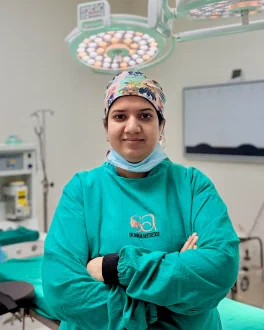
Dr. Shikha Bansal approaches mommy makeover planning as an individual surgical decision, not a fixed bundle. If you would like a consultation-led discussion about safety, scars, recovery demands, and whether a combined plan is appropriate for you, you can book a consultation in Gurgaon.