

You’ve noticed some fullness near your underarm. Maybe it spills over your bra. Maybe it shows in sleeveless tops. You’ve probably Googled “armpit fat” at least once. But something about it doesn’t feel like regular fat. It gets worse around your period, or it showed up after pregnancy and never left.
You’re not imagining things. That bulge could be ordinary fat, accessory breast tissue, loose skin, or some mix of all three. They look similar from the outside, but they behave differently and they respond to different treatments.
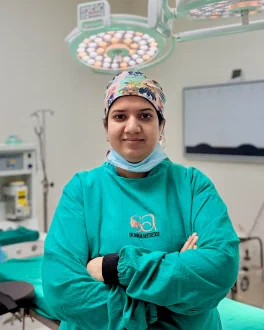
This guide will help you figure out which one you’re probably dealing with, and when it makes sense to see a surgeon about it. It won’t replace an actual exam with Dr. Shikha Bansal, but it should make that conversation a lot more productive.
Looking for details on the surgical procedure? See the axillary breast tissue removal page for how the surgery is done, where the incision is placed, recovery, and results.
Who this is for
If any of these sound familiar:
- You’ve noticed fullness near your armpit, side of the breast, or along the bra line
- You’re not sure if it’s fat, glandular tissue, or something hormonal
- Bras, fitted clothes, or sleeveless tops make it hard to ignore
- You want to understand whether accessory breast tissue removal would actually help your specific situation
This is especially worth reading if the area seems to swell, get tender, or change in size after puberty, pregnancy, breastfeeding, or weight shifts.
What axillary breast tissue actually is
Axillary breast tissue (sometimes called accessory breast tissue) is breast tissue that ended up outside the main breast mound, usually near the armpit. It’s there because breast tissue develops along an embryologic “milk line” during fetal development. In some women, a bit of tissue stays behind in the underarm area instead of confining itself to the breast.
This leftover tissue can contain fat, glandular breast tissue, or both. Many women live with it for years without realizing what it is. Then something changes:
- Hormones cause it to swell or feel firmer
- Pregnancy or breastfeeding reshapes the breast and underarm area
- Weight gain makes the region more prominent
- A new bra or outfit suddenly makes the bulge obvious
The thing that separates axillary breast tissue from plain fat: it’s actual breast tissue. It can respond to hormones the way your breasts do.
How it differs from regular armpit fat
Regular armpit fat is part of your body’s overall fat distribution. Gain weight, it gets bigger. Lose weight, it usually shrinks. Straightforward.
Axillary breast tissue doesn’t follow those rules as neatly. Because it’s glandular, it can stick around even after weight loss. It can swell with your cycle. It can get tender before your period.
Here’s a rough comparison:
| Feature | Regular armpit fat | Axillary breast tissue |
|---|---|---|
| What it is | Localized fat deposits | Accessory breast tissue, often mixed with fat |
| Responds to hormones? | Not much | Can swell with periods, pregnancy, breastfeeding |
| Changes with weight loss? | Usually yes | Partly, but often doesn’t disappear |
| Symptoms | Mostly cosmetic | Can include tenderness, swelling, firmer feel |
| If treated surgically | Contour reduction (liposuction) | Tissue removal, sometimes with contouring |
Worth noting: you can have both at the same time. Accessory tissue with a layer of fat around it is actually quite common.
What causes armpit fat in females
Armpit fullness isn’t one thing with one cause. Several factors contribute, often at the same time:
- Body fat distribution. Genetics determine where your body stores fat. Some women naturally carry more in the upper arm, chest wall, and underarm area regardless of overall weight.
- Bra fit and compression. A bra that’s too tight, too small in the cup, or has a narrow underwire can push breast and surrounding tissue outward, creating the appearance of a bulge that isn’t really “extra” tissue at all.
- Skin laxity. After weight loss, pregnancy, or with age, skin in the underarm area can loosen. This can make even a small amount of underlying tissue look more prominent.
- Accessory breast tissue. As described above, some women have actual breast tissue in the underarm area from birth. It’s not caused by anything you did or didn’t do.
- Posture and muscle tone. How the pectoralis and latissimus muscles sit can affect how the underarm area looks, especially with arms at your sides.
For most women, the fullness is some combination of these factors. That’s exactly why a visual self-check can only get you so far.
Why hormones, pregnancy, and weight changes make it confusing
This is the part that trips most women up. The underarm area doesn’t behave the same way month to month or year to year, so it’s hard to pin down what’s going on.
Some women say it gets fuller or sore around their periods. Others first notice it during pregnancy or while breastfeeding. Some see it only after gaining weight and assume it must just be fat.
All of those experiences are real and valid. Accessory breast tissue responds to hormonal shifts because it is breast tissue, just in an unusual location. During pregnancy or lactation, you might notice:
- The underarm area getting noticeably fuller
- Tenderness or a heavy feeling
- Irritation where the bra presses against it
- One side being bigger than the other
Weight changes play a role too, but they don’t explain everything. If the bulge stays obvious after you’ve lost weight, or if it follows a hormonal pattern (worse before periods, better after), accessory tissue is probably part of the picture.
If pregnancy changed your overall breast shape too, the article on breast surgery options after pregnancy can help you see the underarm issue in a broader context.
Signs that point toward accessory breast tissue
No article can diagnose you. But these features make accessory breast tissue more likely than plain fat:
- The bulge has been there since puberty, or became obvious around that time
- It swells or gets tender with your cycle
- It became more obvious during pregnancy or breastfeeding
- It persists even when your weight is stable
- Your bra rubs against it or pushes it out awkwardly
- It looks like an extension of the breast rather than a soft general fullness
- It bothers you in sleeveless clothes regardless of your weight
None of these prove anything on their own. But they tell a surgeon something about how the tissue is behaving, which matters more than how it looks.
When it’s probably just fat
Sometimes underarm fullness is exactly what it looks like: normal body fat in a normal location. That’s more likely when:
- It shrinks noticeably when you lose weight
- There’s no hormonal tenderness or monthly swelling
- The fullness is soft and spread out rather than firm and localized
- Your main concern is how it looks, not how it feels
Even then, don’t be too confident in your self-diagnosis. Underarm contour is affected by posture, skin laxity, bra fit, the outer shape of the breast, and just general tissue distribution. It’s more complicated than it seems. If it does turn out to be mostly fat and it still bothers you at a stable weight, the option a surgeon would usually discuss is liposuction, not tissue removal.

What happens in a consultation
When patients come in saying they have “armpit fat,” Dr. Shikha Bansal’s job is to figure out what’s actually going on underneath the skin. That means looking at:
- Where the fullness sits relative to the breast and the arm
- Whether it feels soft and fatty or firmer and more glandular
- Whether it’s on one side or both
- Whether symptoms follow the menstrual cycle or changed with pregnancy
- Whether there’s extra skin or irritation in the area
- Whether weight loss has made any difference
The reason this matters: the treatment depends entirely on what the fullness actually is. What works for one patient won’t be the right answer for another if the anatomy is different.
When surgery makes sense
Surgery becomes worth discussing when the underarm fullness:
- Sticks around at a stable weight
- Causes rubbing, irritation, or discomfort with bras
- Meaningfully affects how clothes fit or how you feel in them
- Keeps swelling or getting tender
- Is distinct enough that you’d rather address it directly than keep wondering
The goal of surgery is to remove the accessory tissue and smooth out the contour, sometimes with liposuction alongside the excision. The procedure page walks through axillary breast removal surgery step by step, from incision placement to recovery.
But not every woman with underarm fullness needs surgery. If the area is small, not bothersome, and mostly cosmetic, it might not warrant an operation. Surgery is for cases where the problem is persistent and genuinely affecting your daily comfort or confidence.
What surgery can and can’t do
| What surgery can help with | What it won’t guarantee |
|---|---|
| Reducing a localized bulge from accessory tissue | Perfect symmetry between both sides |
| Improving the underarm contour in clothing and bras | A completely invisible scar |
| Relieving irritation or heaviness from the extra tissue | That every bit of fullness will be gone |
| Addressing tissue that doesn’t respond to weight loss | That future hormonal or weight changes won’t affect the area |
The best consultations are honest about both the likely benefit and the trade-offs: where the incision goes, what recovery looks like, and the reality that small contour differences or natural asymmetry can still exist afterward.
Recovery and scarring
Recovery varies depending on how much tissue was removed and whether contouring was done alongside the excision. Generally, expect:
- Soreness and tightness around the underarm
- Some swelling and bruising
- Limited arm movement for the first week or so
- A scar that continues maturing for months
The incision is usually placed in the underarm crease to keep it as discreet as possible. But it’s still a real scar, and a careful surgeon will be upfront about that. What you can expect is that it’s placed carefully, and in most people it softens and fades over several months, though some scars stay thicker or wider.
As with any surgery, there are risks, including fluid collection (seroma), bleeding, slow wound healing in the underarm crease, infection, a thickened or widened scar, and numbness along the inner arm, which is usually temporary. These are gone through with you at consultation.
Plan ahead for the practical stuff too: what bras you can wear, when you can exercise again, how much arm movement will be comfortable in those first couple of weeks. The procedure page sets out a typical recovery timeline after axillary breast tissue removal, including when upper-body exercise usually resumes.
Questions women commonly ask
“If I lose more weight, will it go away?”
It might improve. But if accessory breast tissue is the main issue, weight loss alone probably won’t get rid of it. It’ll shrink the fat component, not the glandular part. When the glandular part is what bothers you, surgical removal of axillary breast tissue is the treatment that addresses it directly, and an examination tells you whether it’s worth doing in your case.
“Why did it get worse after pregnancy?”
Pregnancy hormones can enlarge accessory breast tissue the same way they change the breasts. That doesn’t mean something is wrong. But if the area stays enlarged or uncomfortable once you have finished breastfeeding, getting it evaluated makes sense.
“Can armpit fat or breast tissue be on only one side?”
Yes. Having armpit fullness on one side only is more common than most women expect. The human body is naturally asymmetric, and that applies to fat distribution and breast tissue alike. If you notice armpit fat on one side but not the other, it could be unilateral accessory breast tissue, slightly different fat distribution, or even a difference in how your bra sits on each side. One-sided fullness is often what makes women notice the issue in the first place, but it’s rarely a sign of anything worrying on its own. That said, a new one-sided lump, especially one that is firm, fixed or growing, should be examined by a doctor.
When to see a plastic surgeon
Consider booking a consultation if:
- You’re not sure whether the fullness is fat, breast tissue, or both
- The area is uncomfortable or gets irritated by your bras
- Weight loss hasn’t helped the way you expected
- You want a clear answer about whether surgery would actually improve things
If you’re in Gurgaon or Delhi NCR, the right consultation will focus on diagnosing what you have, whether you’re a good candidate, what improvement is realistic, and what the trade-offs are. Not on pushing surgery for every underarm bulge.
Frequently asked questions
Is axillary breast tissue dangerous?
Accessory breast tissue itself is usually a benign anatomical variant, not a health threat. That said, any new, unusual, or changing lump in the underarm area should be examined. Don’t dismiss something just because you assume it’s cosmetic.
Can it feel tender?
Yes. Tenderness, swelling, and heaviness are common complaints, particularly around periods, during pregnancy, or while breastfeeding.
Will weight loss always fix armpit fullness?
No. Weight loss helps if the issue is mainly fat. If there’s accessory breast tissue involved, the fullness often remains at least partly.
Is surgery only cosmetic?
Not necessarily. Some women want surgery for the appearance. Others are more bothered by bra irritation, discomfort, or recurring swelling. It depends on the person.
Will surgery remove all the fullness?
That’s not a realistic promise. The goal is meaningful improvement, not perfection. Your final result depends on anatomy, tissue type, skin quality, and how you heal.
Will there be a scar?
Yes. The incision is placed as discreetly as possible, usually within the underarm crease, but you will have a scar.
Is armpit fat normal?
Completely. Almost everyone has some degree of fullness in the underarm area. It’s a natural part of how fat distributes across the chest wall and upper arm. Whether it bothers you enough to do something about it is a personal decision, not a medical one, unless there are symptoms like pain or swelling.
How do I tell the difference between armpit fat and a lump?
Armpit fat is soft, spread out, and moves with the surrounding tissue. A lump tends to feel firmer, more defined, and sometimes fixed in place. The armpit also contains lymph nodes, which can swell with infections and, less often, other conditions - another reason a distinct lump should be examined. If you feel a distinct, hard, fixed or growing lump in your armpit, or one that hasn’t settled within a few weeks, get it checked by a doctor. Don’t assume it’s just fat.
What is a breast tail?
The breast tail (also called the tail of Spence or axillary tail) is a normal extension of breast tissue that reaches toward the armpit. Most women have one to some degree. In some women it’s more prominent, contributing to what looks like underarm fullness. It’s not the same as accessory breast tissue, which develops separately along the milk line, but the two can look and feel similar from the outside.
Can axillary breast tissue become cancerous?
Accessory breast tissue carries the same risks as normal breast tissue, including the small possibility of developing cancer. This is rare, but it’s why any new, hard, or changing lump in the underarm area deserves a proper evaluation rather than being dismissed as cosmetic.
Next step
If you’ve been calling it “armpit fat” but something about it doesn’t add up, scrolling through more photos online won’t give you an answer. An in-person assessment will.
If underarm fullness is affecting your comfort, your bra fit, or how you feel in your clothes, book a consultation with Dr. Shikha Bansal. She can tell you whether it’s ordinary fat, axillary breast tissue, or a combination, and whether surgery would realistically make a difference for you.